
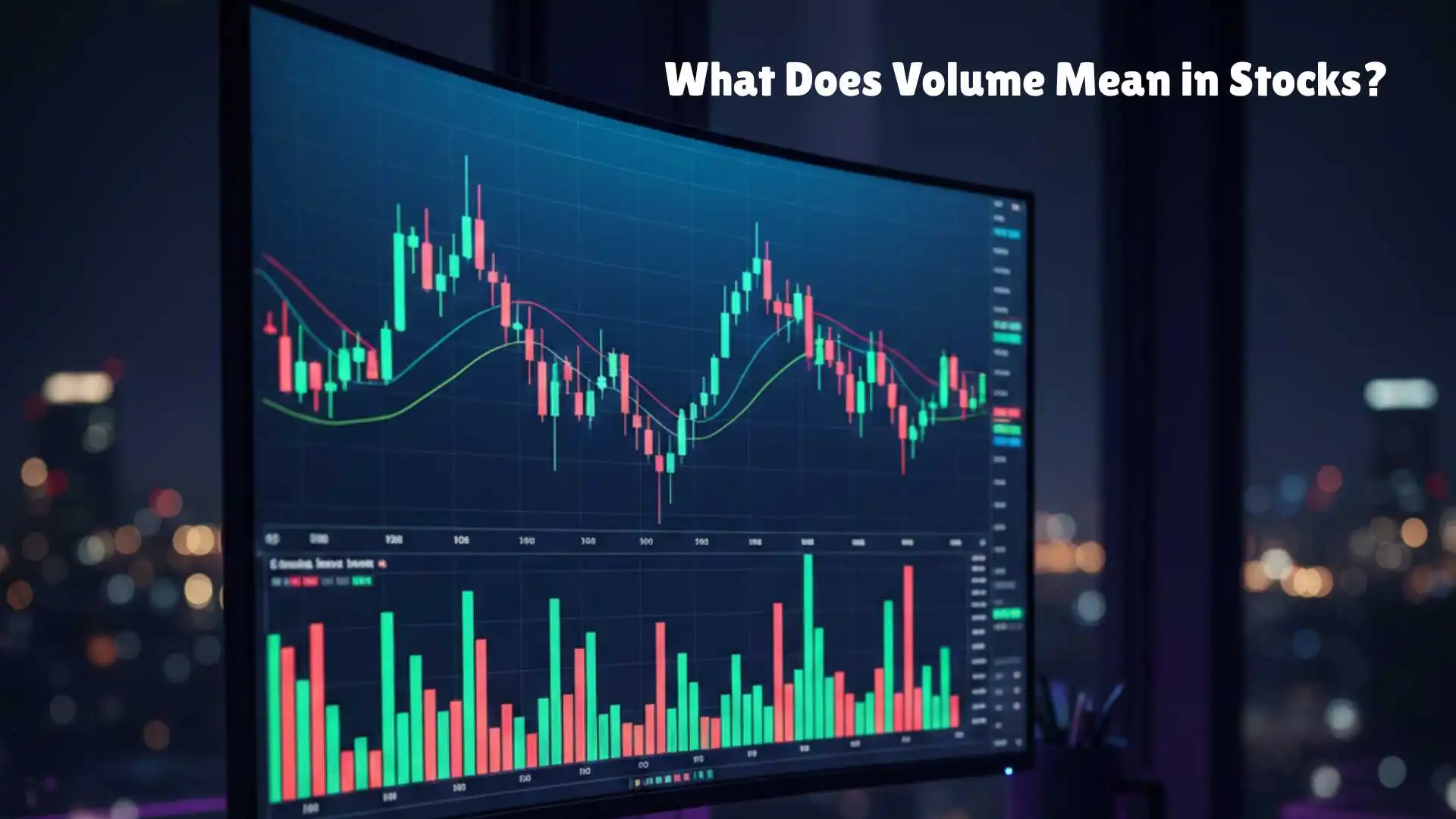
I still remember the first time I opened a trading app and saw the word “Volume” flashing under every stock chart. I stared at it like it was some secret Wall Street code.
Was it about sound? Was something loud happening in the stock market?
After searching everywhere and asking a friend who trades daily, I finally understood what “volume” really meant — and it changed the way I looked at stock movements forever.
Quick Answer: Volume in stocks means the total number of shares traded in a given period. It’s a market activity indicator that shows how active or popular a stock is at a specific time.
What Does Volume Mean in Stocks?
In simple terms, volume tells you how many shares of a stock were bought or sold during a specific time frame (like 1 minute, 1 hour, or 1 day). High volume means lots of people are trading that stock. Low volume means fewer traders are active.
It’s one of the first things new investors learn because it reveals how much interest or momentum the stock has at the moment.
Example:
“If a stock has a volume of 10 million today, it means 10 million shares changed hands.”
In short: Volume = Number of shares traded = Market activity level.
Where Is Volume Commonly Used?
You’ll find stock volume everywhere trading happens. It’s a standard and essential metric across:
- 📱 Trading apps (Robinhood, Webull, eToro, TD Ameritrade)
- 💻 Stock chart platforms (TradingView, MarketWatch, Yahoo Finance)
- 📰 Business news (CNBC, Bloomberg)
- 🎮 Trading communities & groups (Reddit, Discord, Telegram trading chats)
- 🧮 Technical analysis tools (volume bars, indicators, volume profiles)
Tone: Volume is used in formal, educational, and professional market analysis, but also casually among traders discussing moves.
Examples of “Volume” in Conversation
Here are some real-life, casual chat-style examples of how people mention volume:
Example 1
A: bro this stock is pumping
B: yeah volume is good today 🔥
Example 2
A: should i buy now?
B: wait for volume confirmation 📊
Example 3
A: why did it drop?
B: low volume… no buyers 😭
Example 4
A: chart looks dead
B: volume is super low lol
Example 5
A: thinking to enter at breakout
B: same, just watching volume first
Example 6
A: market feels slow today
B: yup… volume is down everywhere
Example 7
A: why’s this stock trending?
B: huge spike in volume!
When to Use and When Not to Use “Volume”
✅ When to Use
- When discussing stock activity
- When analyzing trends or breakouts
- When deciding entry or exit points
- When explaining market momentum
- When comparing stock popularity
❌ When NOT to Use
- In non-investing conversations (it won’t make sense)
- When explaining stock moves to beginners who don’t know basics
- In formal emails unrelated to trading
- When talking about other kinds of “volume” (like sound)
Comparison Table
| Context | Example Phrase | Why It Works |
|---|---|---|
| Friend Chat | “volume is wild today 😭” | Casual & simple |
| Trading Chat | “breakout confirmed with volume” | Relevant trading terminology |
| Market Analysis | “volume shows strong interest” | Professional & informative |
| Business Email | “The stock saw increased volume today.” | Clear & formal |
| Social Media | “Volume spike!!! 🚀” | Trendy & expressive |
Similar Slang Words or Alternatives
| Term | Meaning | When to Use |
|---|---|---|
| Liquidity | How easily a stock can be bought or sold | When discussing smooth trading |
| Volatility | How much a stock price fluctuates | When talking about risk or big moves |
| Breakout | Price moving above a resistance level | When analyzing chart patterns |
| Pullback | A temporary price drop | When describing dips |
| Momentum | Speed/strength of price movement | When analyzing trend direction |
FAQs About Volume in Stocks
1. Is high volume good?
Not always. High volume means lots of trading activity, but the price could be moving up or down.
2. What causes volume to rise suddenly?
News, earnings reports, hype, social media trends, or big institutional investors entering/exiting.
3. Can low volume be risky?
Yes. Low volume can mean low liquidity which makes it harder to buy/sell quickly.
4. Does volume affect stock price?
It doesn’t directly change price but influences momentum and volatility.
5. Where do I check stock volume?
Every major trading platform displays volume on charts or under price data.
Conclusion
Stock volume may seem like a complicated concept at first but once you understand it your market analysis becomes much clearer. It helps you spot momentum, confirm breakouts, and understand trader interest. Whether you’re a beginner or an active trader volume is a tool you simply can’t ignore. The more you track it the better you get at understanding market behavior.

John Preston is a passionate American author known for his insightful storytelling and thought-provoking narratives. With a deep love for literature and a sharp eye for detail, John crafts stories that not only entertain but also inspire reflection and growth. His modern writing style, combined with relatable characters and real-life settings, has earned him a loyal readership across diverse audiences.
Dedicated to exploring human emotions, relationships, and societal challenges, John brings authenticity and depth to every page he writes. When he’s not working on his next manuscript, you can find him in his cozy office, surrounded by books, a warm cup of coffee by his side, and his laptop always within reach.
Some of his most notable works include:
The Silent Echoes
Chasing the Dawn
Beneath the City Lights
Through his writing, John Preston continues to leave a lasting impact, one story at a time.