
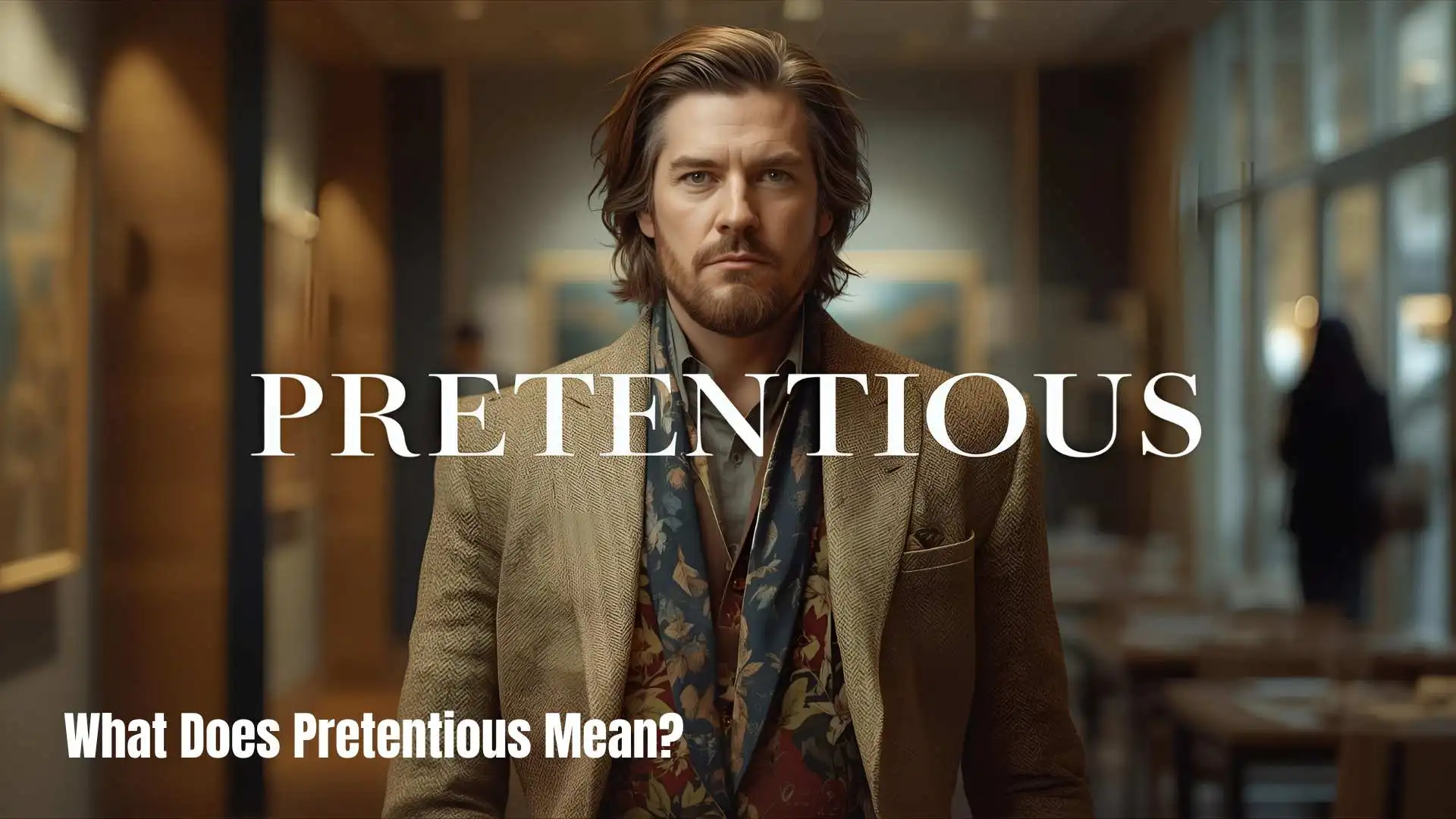
Ever scrolled through a comment section and spotted someone calling a movie “pretentious”… and suddenly you weren’t sure whether that was a compliment or an insult?
Same here. The first time I saw the word on Instagram, I nodded like I understood it, but deep down I had no clue.
Later, after someone used it about my favorite show, I finally looked it up — and everything made sense.
Now you won’t have to pretend like I did.
Quick Answer: Pretentious means trying to appear more important, intelligent, or cultured than you really are. It’s usually a negative, slightly sarcastic word people use in texting or social media to call something “fake fancy.”
What Does Pretentious Mean in Text?
In texting, pretentious is used to describe a person, caption, movie, book, or behavior that feels “show-offy,” “overly fancy,” or “trying too hard to look smart.”
It’s not slang — it’s a real English word — but it’s used casually online because it perfectly captures the vibe of someone acting “extra” for attention.
Example sentence:
“His review was so pretentious, like he wanted to sound deep 😂”
In short: Pretentious = Trying to sound smarter or better than you are = Fake fancy behavior.
Where Is Pretentious Commonly Used?
You’ll usually see pretentious on:
- 📱 Instagram captions
- 🐦 X/Twitter debates
- 🎬 Movie & book reviews
- 💬 Texting with friends
- 🎧 Music discussions
- 🎮 Gaming or fandom arguments
It’s casual, sarcastic, and best suited for informal conversations — not professional or formal chats.
Examples of “Pretentious” in Conversation
Here are some realistic text chats showing how people use it:
A: watched that movie u recommended
B: yesss thoughts??
A: ngl it felt kinda pretentious 😅
A: why is his caption so long
B: he’s trying to sound deep again 😂 pretentious vibes
A: did u see her review??
B: so pretentious omg
A: be honest… is this outfit too much?
B: not too much but maybe a lil pretentious 😭
A: this café charges $10 for water
B: lmaooo that’s pretentious energy
When to Use and When Not to Use “Pretentious”
✅ When to Use “Pretentious”
- When describing someone who’s trying too hard to appear classy or smart
- When joking with friends about fancy behavior
- When reviewing movies, books, or art
- When pointing out exaggerated or dramatic captions
❌ When NOT to Use “Pretentious”
- In professional or workplace conversations
- When the person might take offense easily
- In serious discussions
- When you actually want to give polite feedback
Comparison Table
| Context | Example Phrase | Why It Works |
| Friend Chat | “This movie was kinda pretentious 😂” | Casual opinion, friendly vibe |
| Work Chat | “The style feels a bit overdone.” | Polite & professional |
| “The content appears overly complex.” | Formal & neutral |
Similar Slang Words or Alternatives
| Slang/Word | Meaning | When to Use |
| Extra | Someone doing too much | Casual jokes with friends |
| Boujee | Acting high-class or expensive | Fun, playful conversations |
| Snobby | Looking down on others | Serious or critical tone |
| Cringe | Embarrassing or trying too hard | Social media reactions |
| Try-hard | Someone who puts in too much effort to impress | Gaming & casual chats |
| Overhyped | Something praised more than it deserves | Reviews & opinions |
FAQs About Pretentious
1. Is “pretentious” always an insult?
Mostly yes. It usually implies fake, exaggerated, or showy behavior.
2. Can you use “pretentious” in formal writing?
You can, but better alternatives would be: “exaggerated,” “affected,” or “overly elaborate.”
3. Can “pretentious” describe places too?
Absolutely — restaurants, hotels, events, or anything that feels unnecessarily fancy.
4. What’s the opposite of pretentious?
Words like “down-to-earth,” “simple,” “authentic,” or “genuine.”
5. Does pretentious mean fake?
Not exactly. It means trying to appear more impressive than you actually are, which feels fake.

James Parker is a passionate and insightful American author known for his unique ability to connect complex ideas with everyday experiences. With a background in creative writing and over a decade of experience in the literary world, James has dedicated his career to inspiring readers through thoughtful storytelling and practical wisdom.
His writing style is modern, engaging, and deeply reflective, often focusing on personal growth, human relationships, and the subtle beauty of life’s challenges. James Parker’s work is highly respected for its authenticity and relevance, making him a favorite among readers seeking both knowledge and emotional connection.
Over the years, James has authored several impactful books, including “The Path Within”, “Finding Clarity”, and “Bridges of Thought”, which continue to resonate with audiences around the world.