
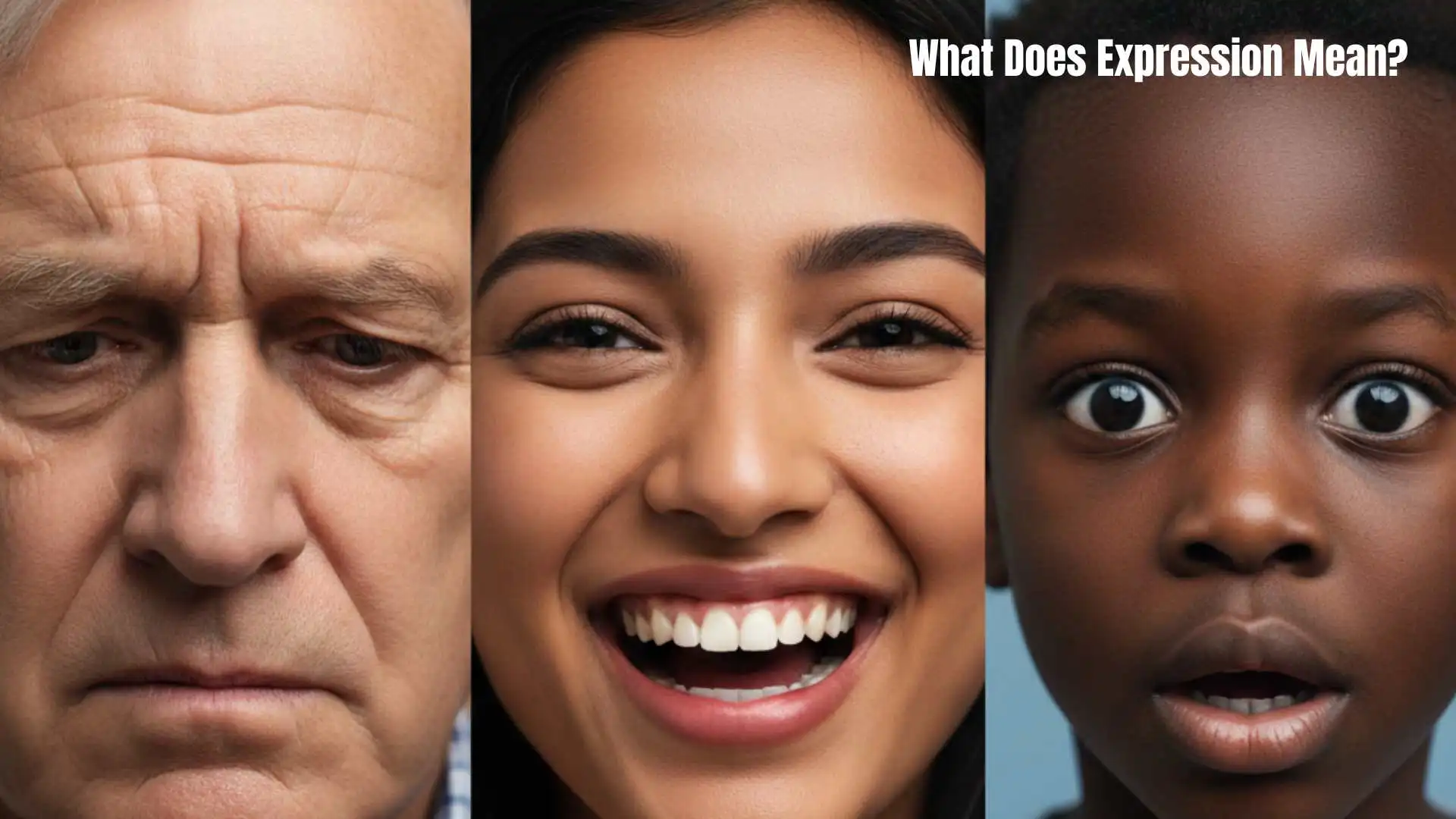
Have you ever been reading a message, a caption, or even a comment and suddenly thought, “Wait… what does this expression actually mean?” You’re not alone.
The first time I really stopped to think about the word expression, it felt oddly confusing. People use it everywhere—texts, emojis, face reactions, art, writing—and somehow it always fits.
That curiosity is exactly why so many people search for its meaning.
An expression can change tone, emotion, and intent in just one word, gesture, or phrase. Understanding it helps you read between the lines and respond the right way.
Quick Answer: Expression means the act of showing or communicating feelings, thoughts, or ideas. It’s a neutral to emotional way of sharing what’s going on inside, whether through words, facial reactions, or actions.
🧠 What Does Expression Mean in Text?
In texting and online chats, expression refers to how someone shows their emotions or thoughts through words, emojis, punctuation, or tone. It’s not a slang acronym but a core communication concept.
For example, adding “!!!” shows excitement, while “…” can express hesitation or sadness. Emojis, short phrases, and even silence can become expressions in digital conversations.
Example sentence:
“She didn’t say much, but her expression said everything 😔.”
In short:
Expression = Showing feelings or thoughts = How emotions are communicated
📱 Where Is Expression Commonly Used?
Expression isn’t limited to one platform—it’s everywhere people communicate.
- 💬 Texting & Messaging Apps (WhatsApp, Messenger)
- 📸 Social Media (Instagram captions, TikTok comments)
- 🎮 Gaming Chats (reactions, emotes, quick replies)
- 🧑💻 Online Forums & Communities
- 😊 Face-to-Face Communication (facial expressions, body language)
Tone-wise:
- ✅ Works in casual and social settings
- ✅ Flexible for emotional contexts
- ❌ Not a replacement for clarity in formal communication
💬 Examples of Expression in Conversation
Here are some realistic, everyday chat examples showing how expression appears naturally:
A: why didn’t you reply earlier
B: sorry… bad day. my expression was off 😅
A: did you like the gift?
B: yeah, my face probably showed it 😂
A: you okay?
B: not really. can’t hide the expression today
A: lol that silence said a lot
B: yeah, that was my expression 😬
A: I knew you were excited
B: guess my expression gave me away 😂
🕓 When to Use and When Not to Use Expression
Knowing when to rely on expression is just as important as knowing what it means.
✅ When to Use
- Casual chats with friends
- Emotional conversations
- Social media posts
- Creative writing or storytelling
❌ When Not to Use
- Formal emails
- Legal or official documents
- Urgent or time-sensitive messages
- Professional instructions without context
Context Comparison Table
| Context | Example Phrase | Why It Works |
|---|---|---|
| Friend Chat | “your expression says it all 😄” | Casual & emotional |
| Work Chat | “I noticed your reaction.” | Neutral & respectful |
| “Your response reflects your opinion.” | Formal & clear |
🔄 Similar Words or Alternatives to Expression
Here are some related words people use instead of expression, depending on the situation:
| Word | Meaning | When to Use |
|---|---|---|
| Reaction | Immediate emotional response | Texts, comments |
| Emotion | Inner feeling | Deep conversations |
| Gesture | Physical movement | In-person talks |
| Tone | Manner of speaking | Writing & speech |
| Look | Facial cue | Casual chats |
❓ FAQs About Expression
Q1: Is “expression” slang?
No. Expression is a standard English word, but it’s often discussed in casual and digital communication.
Q2: Can expression be non-verbal?
Yes. Facial expressions, body language, and even silence count as expressions.
Q3: Why is expression important in texting?
Text lacks body language, so expression helps convey emotion and intent clearly.
Q4: Do emojis count as expressions?
Absolutely. Emojis are digital expressions of feelings and reactions.
Q5: Can expression be misunderstood?
Yes. Without context, expressions—especially in text—can be misread.
✅ Conclusion
Understanding what expression means helps you communicate better, especially in texts and online spaces. It’s how feelings come alive beyond words, whether through emojis, tone, or reactions. When you recognize expressions, conversations feel clearer and more human. Use them wisely, read them carefully, and you’ll avoid many common misunderstandings. Communication isn’t just about words—it’s about expression.

Oliver Grant is a passionate American author known for crafting insightful and engaging content that inspires readers worldwide. With a strong background in creative writing and a deep interest in contemporary literature, Oliver has built a reputation for delivering thought-provoking narratives that resonate with a modern audience.
Throughout his career, Oliver has consistently blended intellectual depth with relatable storytelling, making complex ideas accessible to readers from all walks of life. His writing style is both elegant and approachable, allowing him to connect meaningfully with his audience.
When he’s not writing, Oliver enjoys exploring new ideas, reading across diverse genres, and mentoring aspiring writers. His dedication to the craft and his ability to present fresh perspectives have earned him a loyal following.
Oliver Grant is the author of several acclaimed books, including “The Creative Mindset,” “Stories That Connect,” and “The Modern Writer’s Journey.” Each of these works reflects his commitment to empowering readers and fellow writers through creativity and purposeful storytelling.