
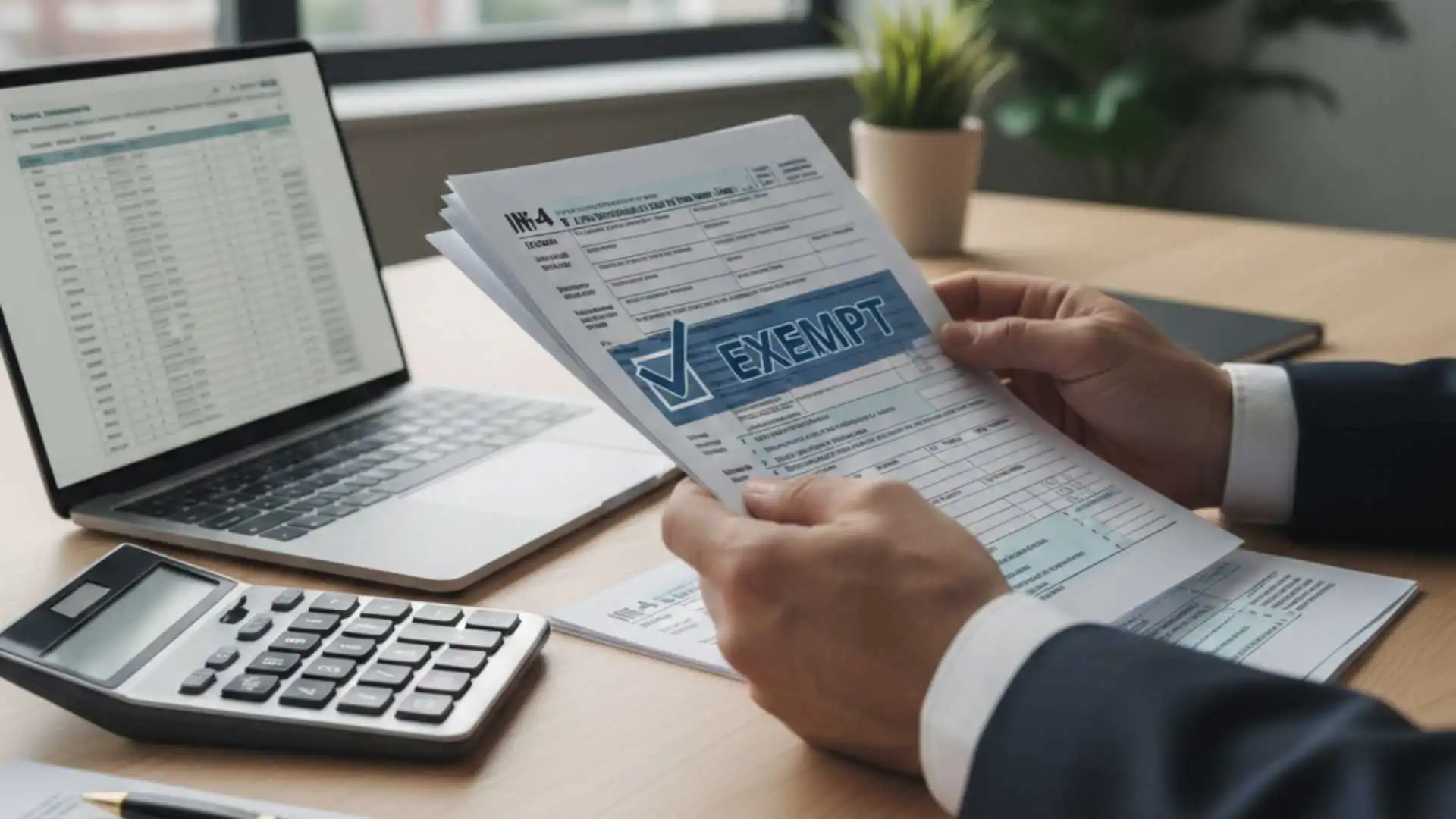
Have you ever been filling out your W-4 form and paused at the phrase “exemption from withholding”? You might have squinted, scratched your head, and wondered, “Wait… what does that even mean?”
I remember my first time encountering it — I was about to start my new job and didn’t want Uncle Sam to take too much of my paycheck, but I wasn’t sure if checking that box was a good idea.
It sounded technical and intimidating, but once I broke it down, it made a lot more sense.
Let’s decode this phrase so you can handle your taxes confidently.
Quick Answer: Exemption from withholding means that your employer will not withhold federal income tax from your paycheck. It’s a formal and financial term used in tax forms to indicate that you qualify to avoid federal tax withholding for that year.
What Does Exemption from Withholding Mean in Text?
While this isn’t a slang word you’ll see on social media, many people search for it in text conversations when talking about paychecks, taxes, or W-4 forms.
In simple terms:
- Exemption from withholding = You don’t want federal taxes taken out of your paycheck.
- To qualify, you generally must owe no federal income tax in the previous year and expect to owe none this year.
Example sentence:
“I claimed exemption from withholding this year so my paycheck isn’t reduced by federal tax.”
In short: Exemption from withholding = No federal tax is withheld = You get your full paycheck without federal deductions.
Where Is Exemption from Withholding Commonly Used? 📱
Even though it’s not a texting slang, people often encounter this phrase in these scenarios:
- 📝 W-4 Forms – When starting a new job or updating withholding.
- 💼 HR Discussions – Conversations with payroll or human resources.
- 📧 Emails with Employers – Communicating tax status.
- 🏦 Finance or Accounting Chats – Between coworkers discussing deductions.
Tone: Formal and professional; not casual or social-media–friendly.
Examples of Exemption from Withholding in Conversation 💬
Here are some realistic examples showing how people might text or message about it:
A: “Hey, did you fill out your W-4 yet?”
B: “Yeah, I claimed exemption from withholding this year 😅”
A: “Why is your paycheck higher this month?”
B: “I put exemption from withholding, so no federal tax was taken out 💸”
A: “I’m so confused about taxes 😩”
B: “Same! Just make sure you check if you qualify for exemption from withholding”
A: “Can I claim exemption if I worked last year?”
B: “Only if you didn’t owe federal taxes last year and expect none this year”
A: “Thanks for helping me understand the W-4 form”
B: “No problem! Exemption from withholding makes it easier sometimes 👍”
When to Use and When Not to Use Exemption from Withholding 🕓
✅ When to Use:
- When you expect no federal income tax liability
- To receive your full paycheck instead of partial withholding
- When your financial situation qualifies you
❌ When Not to Use:
- If you owe taxes and might get a bill at year-end
- In formal situations unrelated to payroll
- If you are unsure about tax eligibility
| Context | Example Phrase | Why It Works |
|---|---|---|
| Friend Chat | “I claimed exemption from withholding 😄” | Casual way to explain your paycheck |
| Work Chat | “I updated my W-4 to claim exemption” | Polite & professional |
| “Please note I am claiming exemption from withholding for this year” | Formal & clear |
Similar Slang Words or Alternatives 🔄
While exemption from withholding isn’t exactly a slang term, here are some related phrases people might encounter in financial discussions:
| Term | Meaning | When to Use |
|---|---|---|
| W-4 | Employee withholding certificate | Job onboarding |
| Federal Tax Withholding | Amount taken from paycheck for federal taxes | Payroll discussions |
| Allowances | Number of exemptions claimed on W-4 | Filling out W-4 |
| Tax Exempt | Not subject to taxes | Eligibility confirmed |
| Payroll Deductions | Money taken out for taxes, benefits, etc. | HR conversations |
FAQs About Exemption from Withholding ❓
Q1: Can anyone claim exemption from withholding?
A1: No. You must meet specific IRS criteria: no tax owed last year and expect none this year.
Q2: What happens if I claim exemption incorrectly?
A2: You might owe taxes and penalties when you file your return.
Q3: Does claiming exemption affect Social Security or Medicare?
A3: No. Exemption from withholding only applies to federal income tax.
Q4: Can I change my exemption status anytime?
A4: Yes, you can update your W-4 form at any point during the year.
Q5: How will I know if I qualify?
A5: Check last year’s tax return and consult IRS guidelines or a tax professional.
Conclusion
Grasping exemption from withholding makes managing your paycheck and taxes much easier. It simply lets you receive your earnings without federal tax being deducted if you qualify. Always check eligibility carefully to avoid surprises during tax season. Knowing when and how to use it ensures your finances stay smooth and stress-free. With this knowledge, you can confidently fill out your W-4 and plan your money wisely.

James Parker is a passionate and insightful American author known for his unique ability to connect complex ideas with everyday experiences. With a background in creative writing and over a decade of experience in the literary world, James has dedicated his career to inspiring readers through thoughtful storytelling and practical wisdom.
His writing style is modern, engaging, and deeply reflective, often focusing on personal growth, human relationships, and the subtle beauty of life’s challenges. James Parker’s work is highly respected for its authenticity and relevance, making him a favorite among readers seeking both knowledge and emotional connection.
Over the years, James has authored several impactful books, including “The Path Within”, “Finding Clarity”, and “Bridges of Thought”, which continue to resonate with audiences around the world.