
Have you ever been scrolling through a sports thread or watching a baseball game and noticed commentators or fans throwing around the term ERA?
At first, it might look like some random acronym, and you might wonder, “Is this a stat, a slang, or something else entirely?”
I remember the first time I saw it while watching a live MLB game—everyone was talking about a pitcher’s ERA, and I had no clue what it meant.
After digging a bit, I realized it’s one of the most important stats in baseball and knowing it can actually make watching the game a lot more fun!
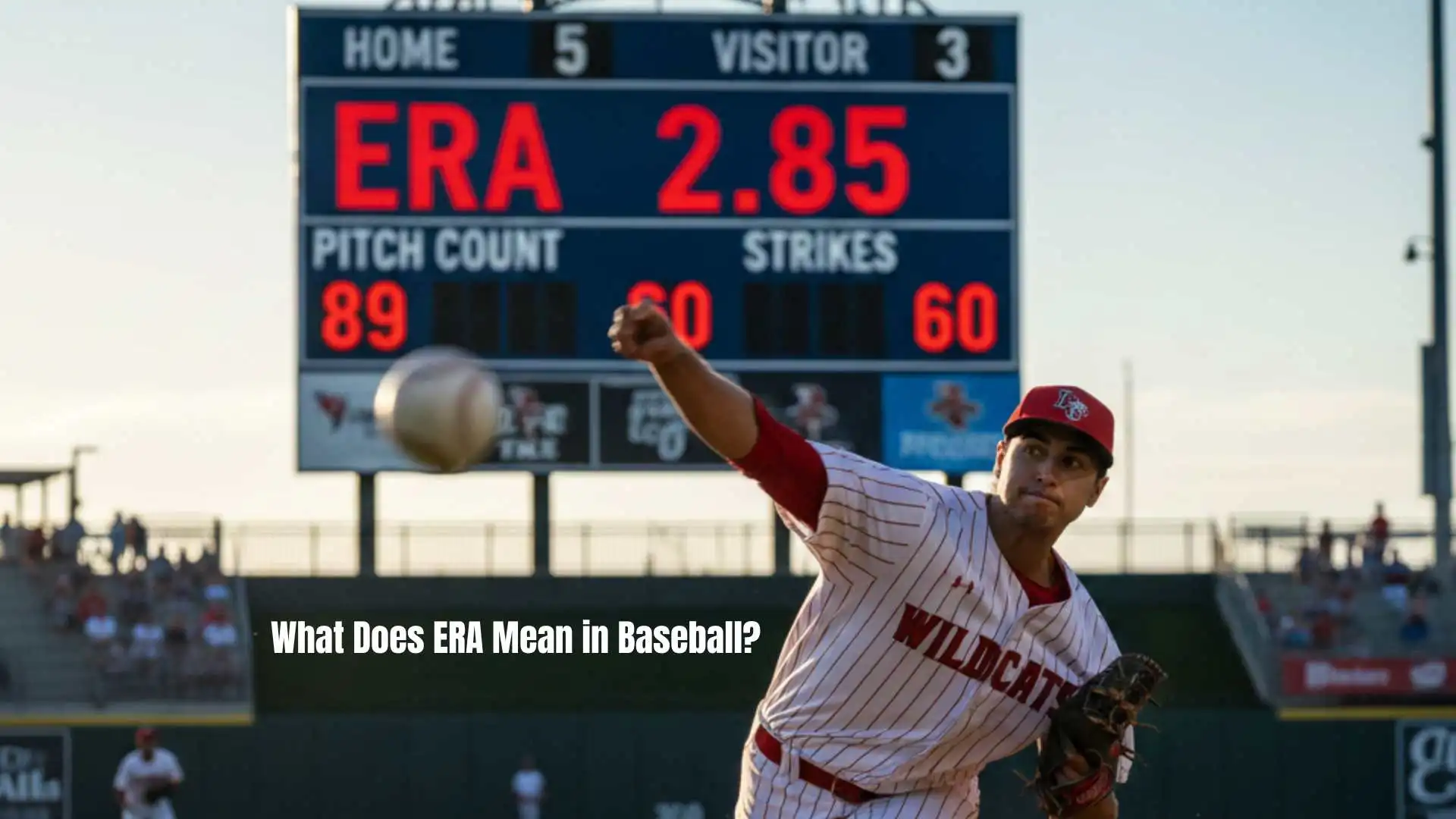
Quick Answer: ERA means “Earned Run Average.” It’s a friendly and informative baseball stat that tells you how many runs a pitcher allows on average per nine innings.
What Does ERA Mean in Text?
In baseball terms, ERA stands for Earned Run Average. It’s a statistic used to measure a pitcher’s effectiveness. Specifically, it calculates the average number of earned runs a pitcher gives up per nine innings pitched. A lower ERA means the pitcher is doing a better job at preventing the other team from scoring.
Example Sentence:
- “Jacob’s ERA this season is 2.85, so he’s been really tough on hitters.”
In short: ERA = Earned Run Average = How many runs a pitcher gives up per nine innings on average.
Where Is ERA Commonly Used?
ERA is popular in:
- ⚾ Baseball broadcasts – MLB, minor leagues, international games
- 📰 Sports articles & blogs – Player stats and analysis
- 📱 Texting or social media – Fans discussing games
- 🎮 Fantasy baseball chats – Tracking pitcher performance
Tone: Mostly informal, social-media–friendly, but can also appear in formal sports journalism.
Examples of ERA in Conversation
Here are some realistic ways ERA is used in chats or texts:
A: “I think our fantasy pitcher is overperforming.”
B: “Totally, his ERA dropped to 1.95!”
A: “Who’s the best starter this week?”
B: “Definitely Mike, his ERA is unreal 👏”
A: “Why did he get pulled so early?”
B: “His ERA’s been rising lately, not looking good 😬”
A: “Do you follow MLB stats?”
B: “Yep, ERA is my go-to stat for pitchers ⚾”
When to Use and When Not to Use ERA
✅ When to Use:
- Talking with friends about baseball
- Fantasy baseball leagues
- Social media sports discussions
- Explaining stats in blogs or articles
❌ When Not to Use:
- Formal business emails
- Academic writing unrelated to sports
- Serious conversations with non-baseball fans
Comparison Table
| Context | Example Phrase | Why It Works |
| Friend Chat | “No way, his ERA is amazing 😄” | Casual & friendly |
| Work Chat | “Pitcher stats are strong this week.” | Professional & clear |
| “The pitcher’s Earned Run Average is 3.12 this season.” | Formal & precise |
Similar Slang Words or Alternatives
| Slang | Meaning | When to Use |
| WHIP | Walks + Hits per Innings Pitched | Baseball stats, fantasy leagues |
| K | Strikeout | Casual fan chats or texts |
| HR | Home Run | Social media or commentary |
| BB | Base on Balls / Walk | Fantasy baseball or stats talk |
| SO | Strikeout abbreviation | Informal baseball texting |
FAQs About ERA
Q1: Is a lower ERA always better?
Yes! A lower ERA means the pitcher allows fewer earned runs, which is ideal.
Q2: Can ERA be used for teams too?
Mostly it’s used for individual pitchers, but team ERA stats exist to measure overall pitching performance.
Q3: Does ERA include unearned runs?
No, ERA only counts earned runs, not runs that scored due to errors or fielding mistakes.
Q4: Is ERA used outside baseball?
Not really—it’s specific to baseball, though fantasy games and discussions might use it casually in texts.
Q5: What’s a good ERA number?
Below 3.00 is excellent in MLB, 3.00–4.00 is solid, and above 5.00 is considered weak.
Conclusion:
Understanding ERA can make you feel more confident in baseball chats and social media discussions. It’s a quick way to know how effective a pitcher is and adds depth to game conversations. Next time someone mentions ERA in a text or post, you’ll instantly know what they mean. Whether for casual fan chats or fantasy leagues, this stat is both useful and fun to know.

John Preston is a passionate American author known for his insightful storytelling and thought-provoking narratives. With a deep love for literature and a sharp eye for detail, John crafts stories that not only entertain but also inspire reflection and growth. His modern writing style, combined with relatable characters and real-life settings, has earned him a loyal readership across diverse audiences.
Dedicated to exploring human emotions, relationships, and societal challenges, John brings authenticity and depth to every page he writes. When he’s not working on his next manuscript, you can find him in his cozy office, surrounded by books, a warm cup of coffee by his side, and his laptop always within reach.
Some of his most notable works include:
The Silent Echoes
Chasing the Dawn
Beneath the City Lights
Through his writing, John Preston continues to leave a lasting impact, one story at a time.