
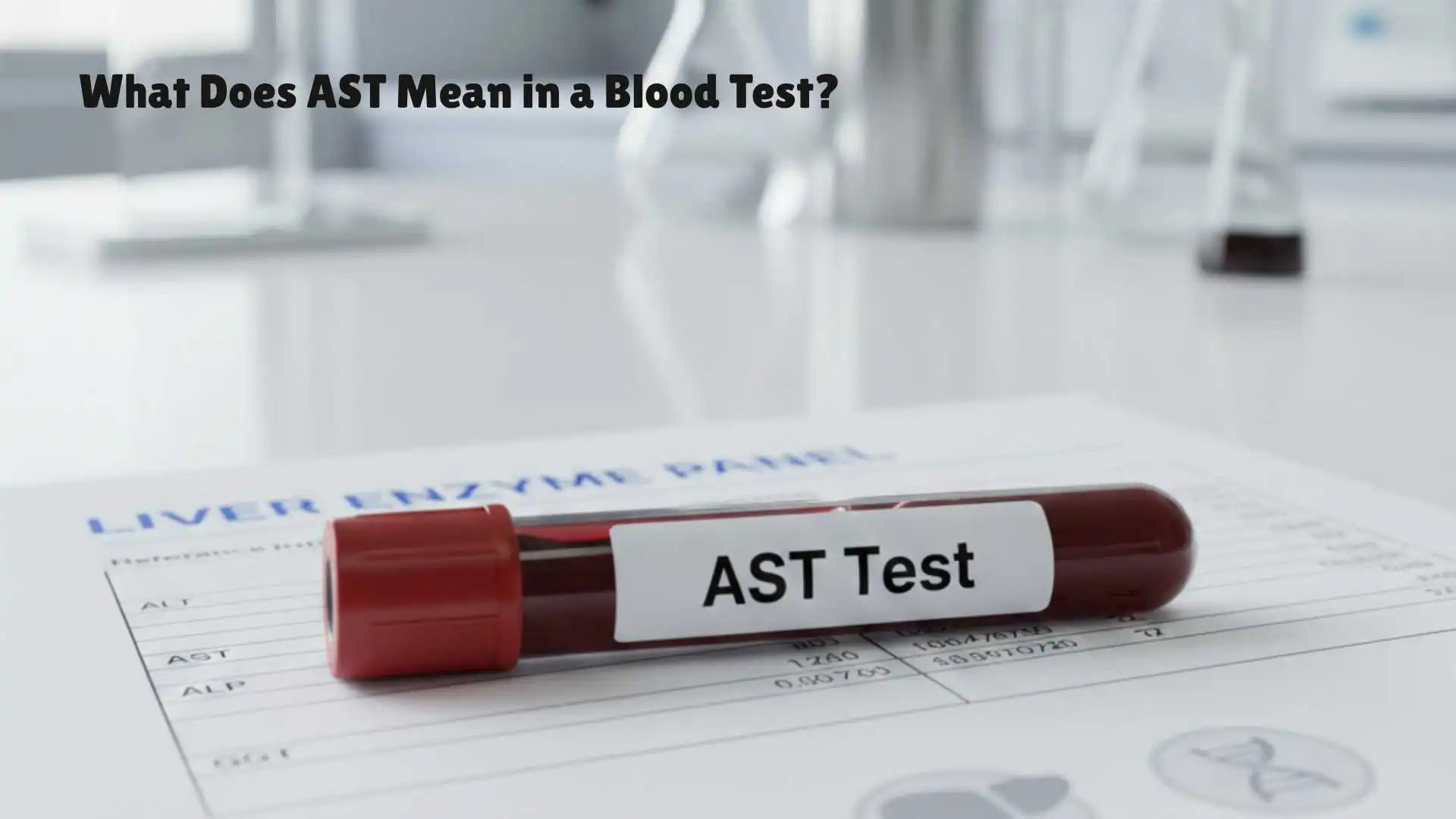
Ever stared at your lab report and spotted AST… then froze for a moment wondering if something was wrong? You’re not alone.
The first time AST showed up on my blood test, I googled it in panic because the number looked higher than others. Later, my doctor explained it in simple language and everything finally made sense.
So if you’re confused too, don’t worry — here’s the clear, friendly breakdown you actually need.
Quick Answer: AST stands for Aspartate Aminotransferase, an enzyme found mainly in your liver, but also in your heart, muscles, and kidneys.
When your AST level gets high, it often means liver irritation or injury.
What Does AST Mean in a Blood Test?
AST (Aspartate Aminotransferase) is an enzyme your body uses to process amino acids. Small amounts of AST in your blood are normal. But when your liver or muscles get damaged, AST leaks into the bloodstream and the level rises.
Example:
“Your AST is slightly elevated, which may mean your liver is under stress.”
In short:
AST = Aspartate Aminotransferase = An enzyme that helps measure liver health.
Where Is AST Used in Medical Testing?
You’ll commonly see AST in:
- Liver Function Tests (LFTs) 🧪
- Routine health checkups
- Tests for hepatitis or liver inflammation 💉
- Evaluating muscle injury 🏋️
- Monitoring alcohol-related liver damage 🍺
- Detecting medication side effects 💊
It’s a medical and formal term — not slang, not casual, and not used in social media or texting.
Examples of AST in Real Medical Conversations
Here’s how “AST” appears in real-life discussions:
1.
A: “My AST came back high. Should I worry?”
B: “Not always. Many things can cause it. Your doctor will explain.”
2.
A: “What’s the normal AST range?”
B: “Usually around 10–40 U/L, depending on the lab.”
3.
A: “My AST is higher than ALT.”
B: “Sometimes that happens with alcohol-related liver stress.”
4.
A: “Doctor said my AST is elevated but ALT is normal.”
B: “That can be related to muscle strain or exercise.”
5.
A: “How do I lower AST levels?”
B: “Hydration, less alcohol, and avoiding heavy workouts before tests.”
When to Worry and When Not to Worry About AST
✅ When Elevated AST Might Make Sense
You may see slightly high AST if:
- You exercised intensely before the test
- You took certain medications
- You had muscle injury
- You drank alcohol recently
- You have mild liver irritation
❌ When Elevated AST Needs Medical Attention
Be careful if:
- AST is very high
- ALT is also high
- You have symptoms like fatigue, nausea, or yellow skin
- You have a history of liver disease
- Levels keep rising over several tests
Comparison Table
| Context | Example Phrase | Why It Matters |
|---|---|---|
| Routine Checkup | “AST slightly elevated; retest in 3 months.” | Mild elevations can be temporary. |
| Liver Issue | “AST and ALT both high.” | Often connected to liver inflammation. |
| Muscle Injury | “High AST, normal ALT.” | Muscle damage can raise AST. |
| Alcohol Impact | “AST>ALT ratio greater than 2.” | A typical pattern in alcohol-related liver stress. |
| Medication Check | “Monitor AST while on this drug.” | Some meds affect liver enzymes. |
Similar Medical Terms or Alternatives
| Term | Meaning | When It’s Used |
|---|---|---|
| ALT | Liver enzyme | Checked with AST to assess liver health |
| ALP | Alkaline phosphatase | Detects bile duct issues |
| GGT | Gamma-glutamyl transferase | Often related to alcohol use |
| Bilirubin | Waste product from blood | High levels indicate liver or bile problems |
| LFT Panel | Full liver test | Comprehensive liver evaluation |
FAQs About AST
Q1: What is a normal AST level?
Most labs consider 10–40 U/L normal, but ranges vary slightly.
Q2: What causes high AST?
Alcohol, medications, liver inflammation, exercise, muscle injury, and infections.
Q3: Should I fast before an AST blood test?
Not always required, but some doctors recommend fasting for accuracy.
Q4: Is AST more important than ALT?
Neither is “more important.” Doctors interpret both together.
Q5: How can I lower my AST levels?
Avoid alcohol, hydrate well, limit heavy exercise before testing, and follow medical advice.
Conclusion
AST plays a key role in understanding liver and muscle health. Seeing an abnormal number can be stressful but the meaning becomes clearer once you learn what this enzyme does. Most causes of elevated AST are treatable and often temporary. Always discuss your results with a healthcare professional for the most accurate interpretation.

James Parker is a passionate and insightful American author known for his unique ability to connect complex ideas with everyday experiences. With a background in creative writing and over a decade of experience in the literary world, James has dedicated his career to inspiring readers through thoughtful storytelling and practical wisdom.
His writing style is modern, engaging, and deeply reflective, often focusing on personal growth, human relationships, and the subtle beauty of life’s challenges. James Parker’s work is highly respected for its authenticity and relevance, making him a favorite among readers seeking both knowledge and emotional connection.
Over the years, James has authored several impactful books, including “The Path Within”, “Finding Clarity”, and “Bridges of Thought”, which continue to resonate with audiences around the world.