
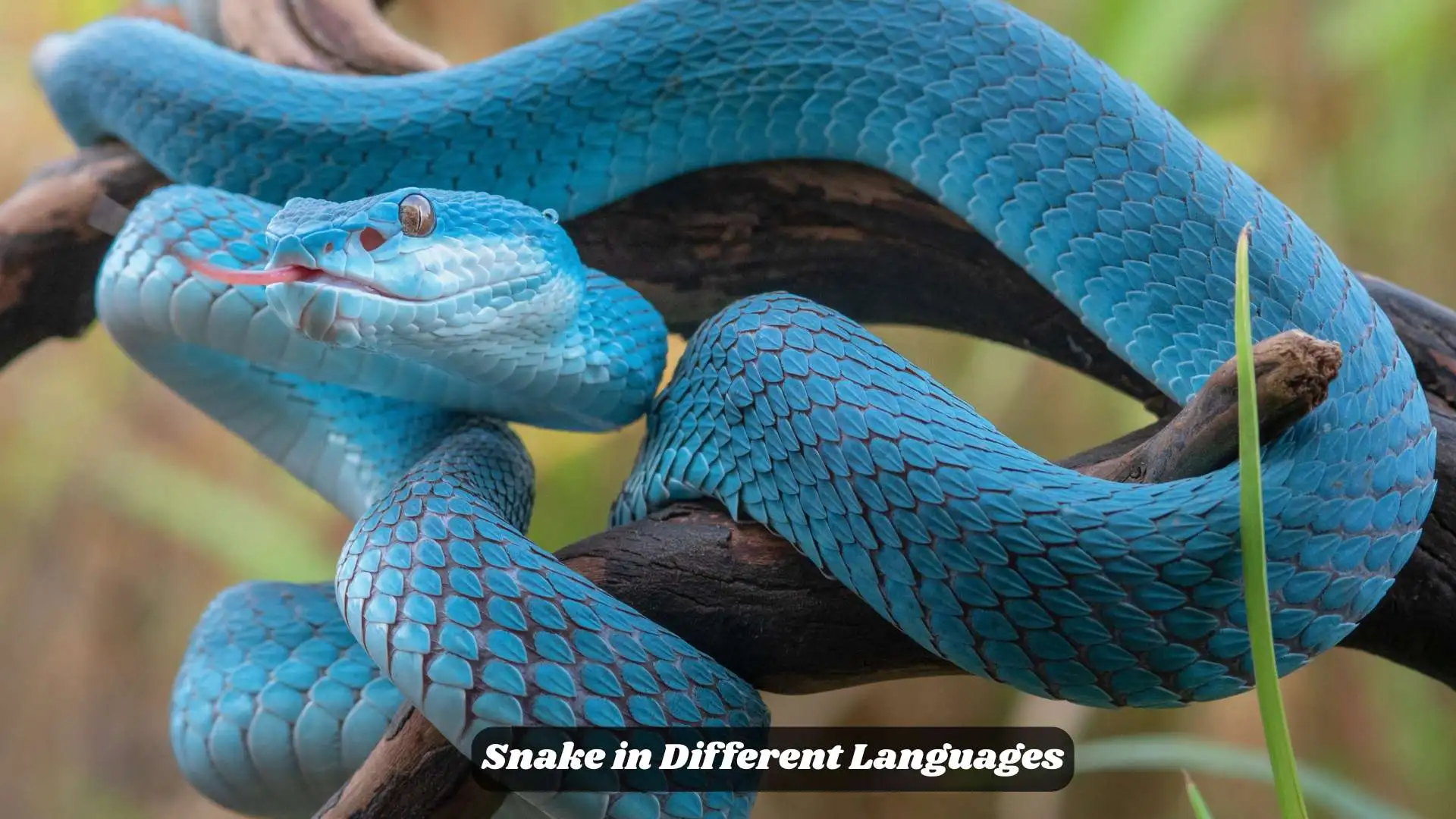
The word snake appears in stories, cultures, and symbols across the globe.
Whether it represents wisdom, danger, transformation, or mystery, this creature has fascinated people for thousands of years.
People often search for how to say snake in different languages when traveling, learning languages, studying symbolism, or simply out of curiosity.
This article is here to help! Below, you’ll find the word snake in 70 languages, with clear pronunciation and an example sentence — making it easy to learn and use confidently.
🌍 How to Say Snake in 70 Different Languages
Each entry shows:
Language (🇨🇳) – [Translation] | Pronunciation: [Simple English Pronunciation]
Example sentence.
- Spanish (🇪🇸) – Serpiente | Pronunciation: ser-pyen-teh
Vi una serpiente en el jardín. - French (🇫🇷) – Serpent | Pronunciation: ser-pawn
Un serpent se cache sous la pierre. - German (🇩🇪) – Schlange | Pronunciation: shlahn-geh
Die Schlange kroch durch das Gras. - Italian (🇮🇹) – Serpente | Pronunciation: ser-pen-teh
Ho visto un serpente vicino al fiume. - Portuguese (🇵🇹) – Cobra | Pronunciation: koh-brah
A cobra deslizou pela areia. - Russian (🇷🇺) – Змея | Pronunciation: zmee-ya
Змея спряталась в траве. - Chinese (🇨🇳) – 蛇 | Pronunciation: shé
我在山里看到了一条蛇。 - Japanese (🇯🇵) – 蛇 | Pronunciation: hebi
庭で蛇を見ました。 - Korean (🇰🇷) – 뱀 | Pronunciation: baem
정원에서 뱀을 봤어요. - Hindi (🇮🇳) – साँप | Pronunciation: saamp
मैंने बगीचे में एक साँप देखा। - Urdu (🇵🇰) – سانپ | Pronunciation: saamp
میں نے باغ میں سانپ دیکھا۔ - Arabic (🇸🇦) – ثعبان | Pronunciation: thu-baan
رأيت ثعبانًا في الحديقة. - Turkish (🇹🇷) – Yılan | Pronunciation: yuh-lahn
Bahçede bir yılan gördüm. - Persian (🇮🇷) – مار | Pronunciation: maar
یک مار را در چمن دیدم. - Hebrew (🇮🇱) – נחש | Pronunciation: na-khash
ראיתי נחש בגינה. - Greek (🇬🇷) – Φίδι | Pronunciation: fee-thee
Ένα φίδι πέρασε μπροστά μου. - Polish (🇵🇱) – Wąż | Pronunciation: vahnsh
Zobaczyłem węża w ogrodzie. - Dutch (🇳🇱) – Slang | Pronunciation: slang
Ik zag een slang in de tuin. - Swedish (🇸🇪) – Orm | Pronunciation: orm
En orm slingrade sig över stigen. - Norwegian (🇳🇴) – Slange | Pronunciation: slang-eh
Jeg så en slange i skogen. - Finnish (🇫🇮) – Käärme | Pronunciation: kair-meh
Käärme luikerteli pihalla. - Danish (🇩🇰) – Slange | Pronunciation: slang-eh
En slange krøb i græsset. - Hungarian (🇭🇺) – Kígyó | Pronunciation: kee-gyo
Egy kígyót láttam az udvarban. - Czech (🇨🇿) – Had | Pronunciation: hahd
V trávě byl had. - Romanian (🇷🇴) – Șarpe | Pronunciation: shar-peh
Am văzut un șarpe în grădină. - Ukrainian (🇺🇦) – Змія | Pronunciation: zmee-ya
Я бачив змію в лісі. - Bengali (🇧🇩) – সাপ | Pronunciation: shaap
বাগানে একটি সাপ ছিল। - Tamil (🇮🇳) – பாம்பு | Pronunciation: paam-boo
நான் ஒரு பாம்பைக் கண்டேன். - Telugu (🇮🇳) – పాము | Pronunciation: paa-moo
నేను ఒక పామును చూశాను. - Kannada (🇮🇳) – ಹಾವು | Pronunciation: haa-voo
ನಾನು ಹಾವನ್ನು ನೋಡಿದ್ದೇನೆ. - Gujarati (🇮🇳) – સાપ | Pronunciation: saap
મારે બગીચામાં સાપ દેખાયો. - Marathi (🇮🇳) – साप | Pronunciation: saap
माझ्या अंगणात एक साप होता. - Punjabi (🇮🇳) – ਸਾਪ | Pronunciation: saap
ਮੇਰੇ ਬਾਗ ਵਿੱਚ ਸਾਪ ਸੀ। - Pashto (🇦🇫) – مار | Pronunciation: maar
ما په باغ کې مار وليدو. - Sinhala (🇱🇰) – සර්පයෙක් | Pronunciation: sar-pa-yek
මම උයනෙ සර්පයෙක් දැකියි. - Nepali (🇳🇵) – सर्प | Pronunciation: sarp
मैले बगैँचामा सर्प देखेँ। - Thai (🇹🇭) – งู | Pronunciation: ngoo
ฉันเห็นงูในสวน. - Lao (🇱🇦) – ງູ | Pronunciation: ngoo
ຂ້ອຍເຫັນງູໃນສວນ. - Vietnamese (🇻🇳) – Rắn | Pronunciation: run
Tôi thấy một con rắn trong vườn. - Khmer (🇰🇭) – ពស់ | Pronunciation: pooh
ខ្ញុំឃើញពស់ក្នុងសួនច្បារ។ - Malay (🇲🇾) – Ular | Pronunciation: oo-lar
Saya nampak ular di taman. - Indonesian (🇮🇩) – Ular | Pronunciation: oo-lar
Ada seekor ular di halaman. - Tagalog (🇵🇭) – Ahas | Pronunciation: ah-has
May ahas sa likod ng bahay. - Mongolian (🇲🇳) – Могой | Pronunciation: mo-goy
Могой өвсөнд нуугдсан байна. - Tibetan (🇨🇳) – ཀླུ་ | Pronunciation: klu
ངས་དུས་ཚོད་གཡོན་ནང་ཀླུ་གཅིག་བལྟ་སྐྱེད་ཡོད། - Swahili (🇰🇪) – Nyoka | Pronunciation: nyoh-kah
Niliona nyoka bustanini. - Zulu (🇿🇦) – Inyoka | Pronunciation: in-yo-kah
Ngibone inyoka engadini. - Xhosa (🇿🇦) – Inyoka | Pronunciation: in-yo-kah
Inyoka igqabhukile eluhlazweni. - Amharic (🇪🇹) – ዝንብ | Pronunciation: z-nib
አንድ ዝንብ በአትክልት ተገኝቷል። - Somali (🇸🇴) – Mas | Pronunciation: maas
Mas ayaa guriga agtiisa maraya. - Hausa (🇳🇬) – Mashi | Pronunciation: mah-shee
Na ga mashi a gonar. - Yoruba (🇳🇬) – Ejò | Pronunciation: eh-joh
Mo ri ejò ni ọgba. - Igbo (🇳🇬) – Agwọ | Pronunciation: ah-gwoh
Agwọ nọ na ubi. - Zulu (🇿🇦) – Inyoka | Pronunciation: in-yo-kah
Inyoka inqamule endleleni. - Maori (🇳🇿) – Noke | Pronunciation: noh-keh
I kite au i te noke i te ngahere. - Hawaiian (🇺🇸) – Nahesa | Pronunciation: nah-heh-sah
Ua ʻike au i ka nahesa ma ka pā. - Tongan (🇹🇴) – Ngaungau | Pronunciation: ngow-ngow
Na‘a ku sio ki ha ngaungau ‘i he ngoue. - Samoan (🇼🇸) – Gata | Pronunciation: nga-tah
Na ou vaʻai i se gata i le togalaau. - Esperanto (🌍) – Serpento | Pronunciation: ser-pen-to
Mi vidis serpenton en la ĝardeno. - Latin (🇻🇦) – Serpens | Pronunciation: ser-pens
Serpens in horto latet. - Icelandic (🇮🇸) – Slanga | Pronunciation: slang-ah
Ég sá slöngu í garðinum. - Estonian (🇪🇪) – Madu | Pronunciation: mah-doo
Ma nägin madu aias. - Latvian (🇱🇻) – Čūska | Pronunciation: choos-kah
Es redzēju čūsku dārzā. - Lithuanian (🇱🇹) – Gyvatė | Pronunciation: gyu-vah-teh
Mačiau gyvatę sode. - Maltese (🇲🇹) – Serp | Pronunciation: serp
Rajt serp fil-ġnien. - Basque (🇪🇸) – Sugea | Pronunciation: soo-geh-ah
Basoan sugea zegoen. - Galician (🇪🇸) – Serpe | Pronunciation: ser-peh
Vin unha serpe no xardín. - Irish (🇮🇪) – Nathair | Pronunciation: nah-hir
Chonaic mé nathair sa ghairdín. - Scottish Gaelic (🏴) – Nathair | Pronunciation: nah-hir
Chunnaic mi nathair sa ghàrradh. - Welsh (🏴) – Neidr | Pronunciation: nay-dur
Gwelais i neidr yn y cae.
🌟 Conclusion
No matter where you go in the world, the word snake always carries mystery, power, and respect.

John Preston is a passionate American author known for his insightful storytelling and thought-provoking narratives. With a deep love for literature and a sharp eye for detail, John crafts stories that not only entertain but also inspire reflection and growth. His modern writing style, combined with relatable characters and real-life settings, has earned him a loyal readership across diverse audiences.
Dedicated to exploring human emotions, relationships, and societal challenges, John brings authenticity and depth to every page he writes. When he’s not working on his next manuscript, you can find him in his cozy office, surrounded by books, a warm cup of coffee by his side, and his laptop always within reach.
Some of his most notable works include:
The Silent Echoes
Chasing the Dawn
Beneath the City Lights
Through his writing, John Preston continues to leave a lasting impact, one story at a time.