
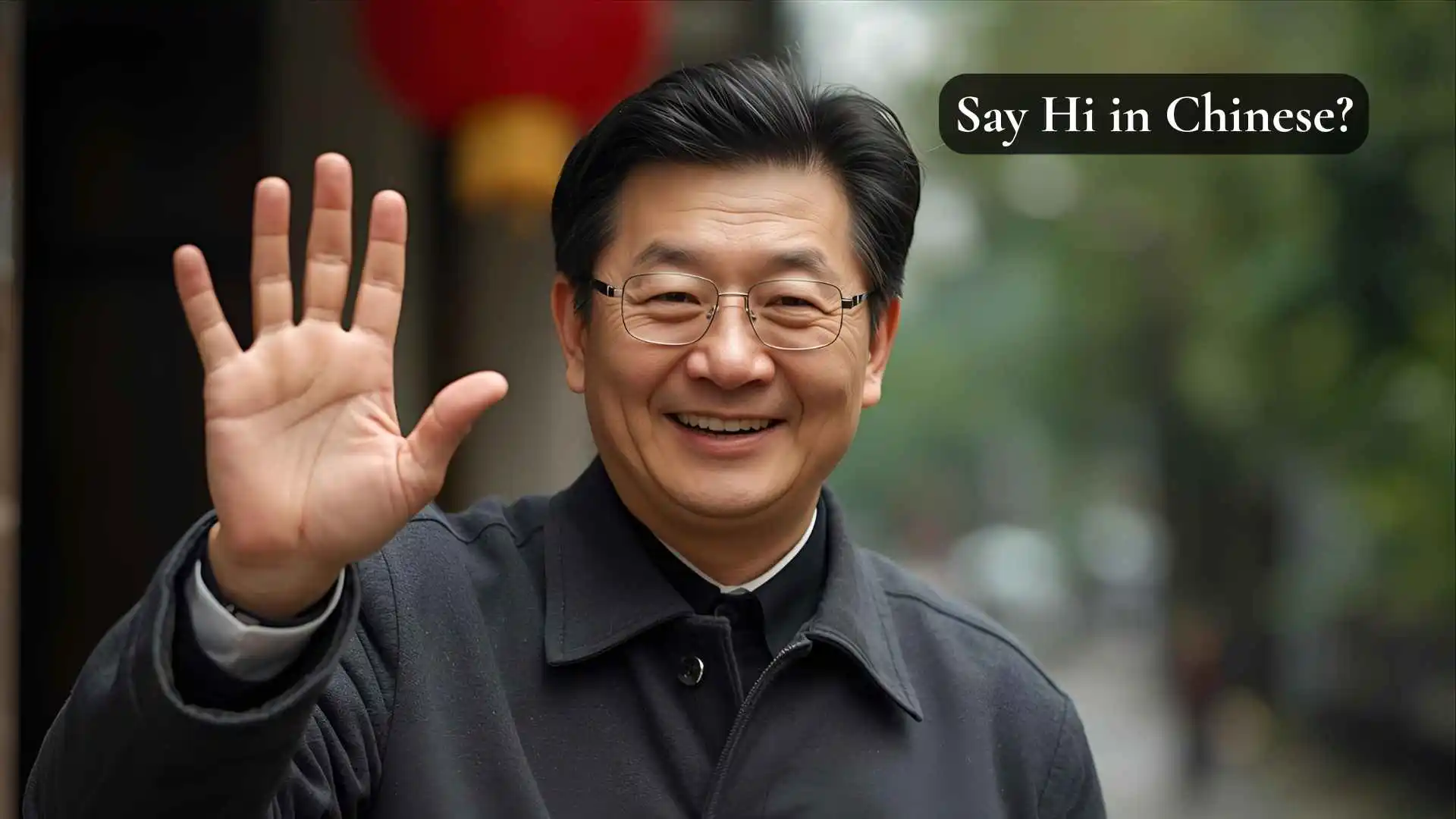
Have you ever wanted to greet someone in Chinese but weren’t sure how to say it the right way?
Don’t worry — you’re about to sound like a native! In this article, I’ll show you exactly how to say hi in Chinese, when to use it, and how to make your greeting sound friendly and natural.
Whether you’re chatting with a friend, meeting someone new, or saying hello online, you’ll find simple phrases you can use instantly.
So, let’s dive in and make your first “hi” in Chinese unforgettable!
The Most Common Way to Say Hi in Chinese
The easiest and most common way to say hi in Chinese is:
👉 你好 (nǐ hǎo) — “Hello” or “Hi”
Pronunciation tip:
Say it like “nee how.”
This is a polite, friendly greeting that works in most situations — whether you’re meeting someone in person, on a call, or even typing a message online.
🗣️ Example:
- 你好,我是马克。 (Nǐ hǎo, wǒ shì Mǎkè.) — “Hi, I’m Mark.”
Just like in English, this phrase is safe to use with anyone — from strangers to colleagues.
Casual Ways to Say Hi 👋
Sometimes, “你好” can sound a bit too formal when talking to close friends or family. Let’s see some casual ways Chinese people say hi:
嘿 (hēi) — “Hey!”
Used just like “hey” in English — friendly, casual, and often used in texting.
🗣️ Example:
- 嘿,你好吗? (Hēi, nǐ hǎo ma?) — “Hey, how are you?”
嗨 (hāi) — “Hi!”
Borrowed directly from English! You’ll hear young people use this all the time.
🗣️ Example:
- 嗨,今天过得怎么样? (Hāi, jīntiān guò de zěnmeyàng?) — “Hi, how’s your day going?”
Formal Greetings for Respectful Situations 🏢
When speaking with elders, teachers, or in professional settings, it’s better to sound more respectful.
您好 (nín hǎo) — Polite “Hello”
This is the formal version of “你好.”
“您” (nín) is the polite form of “you.”
🗣️ Example:
- 您好,王老师! (Nín hǎo, Wáng lǎoshī!) — “Hello, Teacher Wang!”
Use 您好 in meetings, at work, or when addressing someone older than you.
Cultural Note 🌏
In Chinese culture, greetings are about respect and warmth, not just words.
While “你好” is common, people often add context — like asking about your meal or your day — instead of saying “hi” alone. For example:
- 吃了吗? (Chī le ma?) — “Have you eaten?”
It’s a friendly, traditional way to greet someone, especially among older generations!
Follow Up Phrases You Can Use After Saying Hi 💬
Once you’ve said “hi,” here are a few natural follow-ups to keep the conversation going:
| English | Chinese | Pronunciation | Meaning |
| How are you? | 你好吗? | nǐ hǎo ma | A polite way to ask how someone’s doing |
| I’m fine, thank you | 我很好,谢谢。 | wǒ hěn hǎo, xièxie | Simple polite response |
| Nice to meet you | 很高兴认识你。 | hěn gāoxìng rènshi nǐ | Great for first meetings |
| Goodbye | 再见 | zàijiàn | Formal goodbye |
| See you! | 回头见! | huítóu jiàn | Casual, friendly farewell |
Just like in English, using these short expressions shows friendliness and respect.
Quick Recap 🌟
- 你好 (nǐ hǎo) — The most common and safe greeting
- 嗨 (hāi) / 嘿 (hēi) — Casual ways to say “hi”
- 您好 (nín hǎo) — Polite and formal greeting
- 吃了吗?(chī le ma?) — A warm, cultural greeting
Conclusion 🌸
Now you know exactly how to say hi in Chinese — and not just one way, but several! Each version carries a slightly different tone, from polite to playful. The best way to remember them is to practice a little every day. So next time you meet a Chinese friend, start confidently with 你好! You’ll be surprised how one simple word can open a friendly door to a whole new culture.

John Preston is a passionate American author known for his insightful storytelling and thought-provoking narratives. With a deep love for literature and a sharp eye for detail, John crafts stories that not only entertain but also inspire reflection and growth. His modern writing style, combined with relatable characters and real-life settings, has earned him a loyal readership across diverse audiences.
Dedicated to exploring human emotions, relationships, and societal challenges, John brings authenticity and depth to every page he writes. When he’s not working on his next manuscript, you can find him in his cozy office, surrounded by books, a warm cup of coffee by his side, and his laptop always within reach.
Some of his most notable works include:
The Silent Echoes
Chasing the Dawn
Beneath the City Lights
Through his writing, John Preston continues to leave a lasting impact, one story at a time.