
Did you know that expressing gratitude doesn’t always need words?
Sign language is more than just gestures — it’s a complete language with its own grammar, expressions, and culture.
By learning even a few basic signs, like “thank you,” you’re opening the door to meaningful connections and showing respect in a universal way. 🌟
In this guide, we’ll explore clear, easy-to-follow signs, when to use them, and even fun variations that make your appreciation feel genuine and heartfelt.
Basic Way to Say Thank You
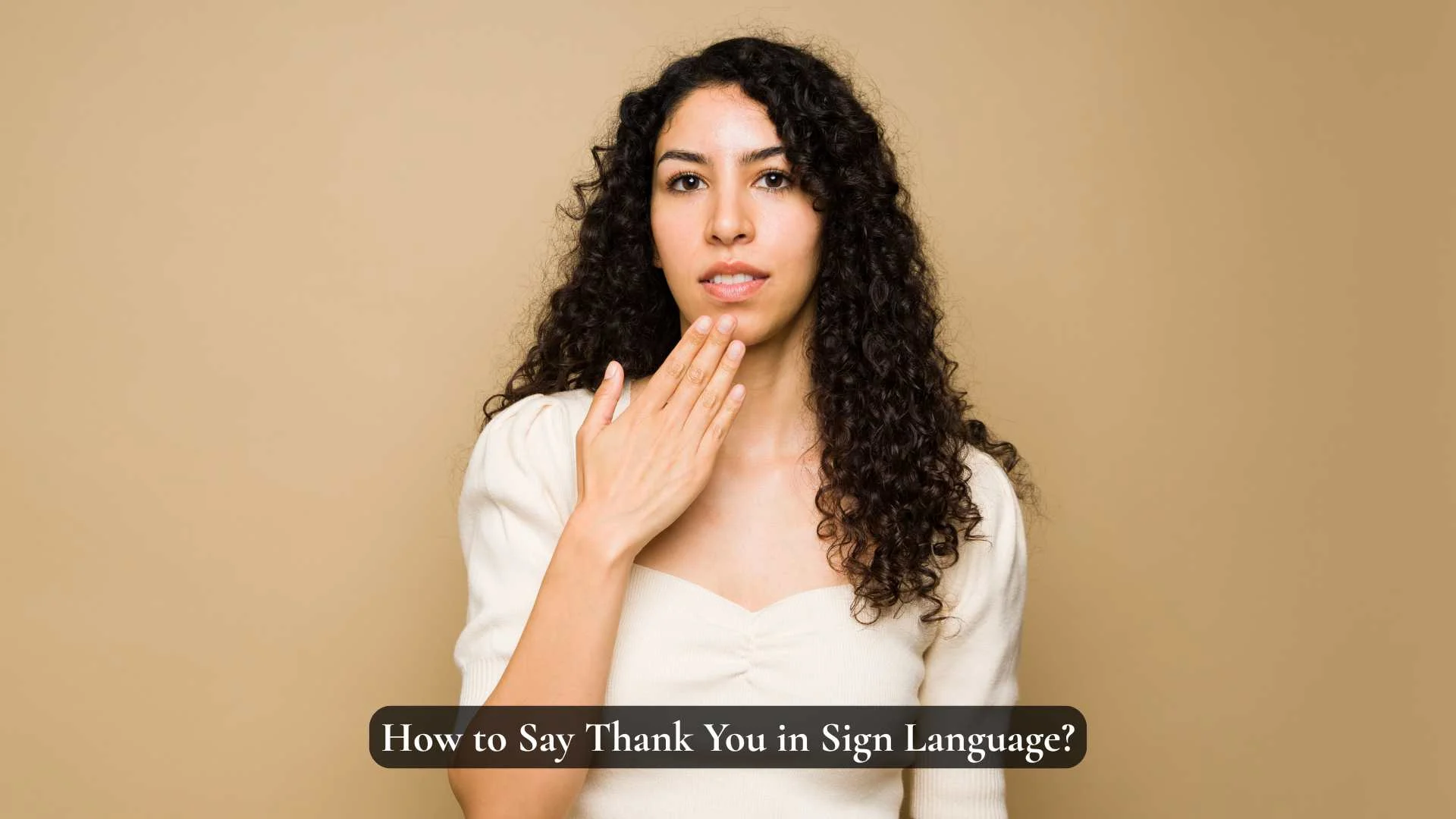
The most common way to say “thank you” in American Sign Language (ASL) is simple and elegant.
- How to do it: Start with your dominant hand near your lips and move your hand forward slightly, away from your face.
- Pronunciation tip: Though it’s visual, thinking “thank you” as you gesture helps reinforce memory.
- When to use: Perfect for casual or everyday gratitude — like thanking a friend or a classmate.
Just like in English, the tone matters! A smile adds warmth and friendliness. 😊
Formal and Polite Ways to Express Thanks
Sometimes, you want to show extra respect or gratitude. In these situations:
- Combine the basic thank you gesture with a slight bow of the head.
- Pair it with a facial expression of sincerity — ASL relies heavily on expressions.
- Use in professional or formal situations, like thanking a teacher, a coworker, or someone you don’t know well.
Let’s look at another example: if someone gives you a gift at a party, signing “thank you” with a bright smile shows appreciation and politeness. 🎁
Fun Variations and Emphasizing Gratitude
Want to show extra enthusiasm? You can:
- Repeat the “thank you” sign twice quickly for emphasis.
- Add a hand over heart gesture to show deep gratitude.
- Combine with simple phrases like “thanks a lot” in speech while signing.
These small variations help you convey not just words but emotion.
Common Follow Up Phrases
After saying “thank you,” you might want to continue the conversation. Here are a few friendly follow-ups:
| Phrase | Sign Tip | Usage |
| How are you? | Touch chest, then gesture open palms | Casual greeting |
| You’re welcome | Thumb up + gentle nod | Response to thanks |
| Goodbye | Wave hand | Standard farewell |
| Nice to meet you | Shake hands lightly + smile | First-time greetings |
These phrases make your signing more conversational and natural.
Cultural Notes & Tips
- Sign language varies by country — ASL is common in the U.S. and parts of Canada, while British Sign Language (BSL) has different signs.
- Facial expressions and body language are just as important as your hands.
- Practicing in front of a mirror or with a friend helps build confidence. 🪞
Conclusion
Learning how to say thank you in sign language is not only fun but also rewarding. Practice the basic gestures, try the formal variations, and mix in follow-up phrases to sound natural. Remember, a smile and a genuine heart make your signs even more meaningful. The more you practice, the more confident you’ll become — soon, signing will feel just as easy as speaking! 🌟

Oliver Grant is a passionate American author known for crafting insightful and engaging content that inspires readers worldwide. With a strong background in creative writing and a deep interest in contemporary literature, Oliver has built a reputation for delivering thought-provoking narratives that resonate with a modern audience.
Throughout his career, Oliver has consistently blended intellectual depth with relatable storytelling, making complex ideas accessible to readers from all walks of life. His writing style is both elegant and approachable, allowing him to connect meaningfully with his audience.
When he’s not writing, Oliver enjoys exploring new ideas, reading across diverse genres, and mentoring aspiring writers. His dedication to the craft and his ability to present fresh perspectives have earned him a loyal following.
Oliver Grant is the author of several acclaimed books, including “The Creative Mindset,” “Stories That Connect,” and “The Modern Writer’s Journey.” Each of these works reflects his commitment to empowering readers and fellow writers through creativity and purposeful storytelling.