
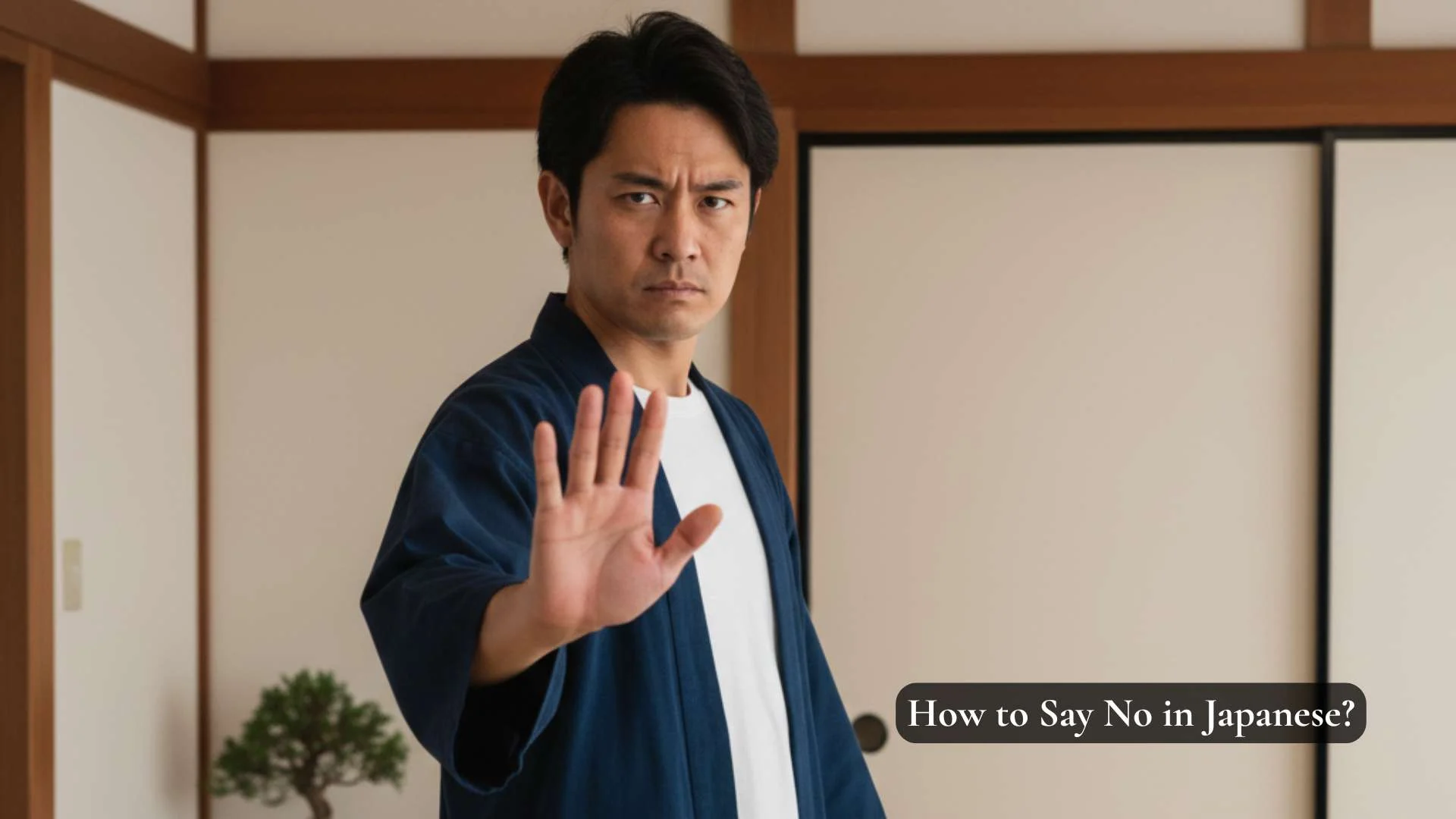
Saying “no” might seem simple in English, but in Japanese, it’s a bit more nuanced. If you’ve ever wondered how to say no in Japanese, you’re in the right place!
Whether you want to politely decline an invitation, refuse a favor, or just express disagreement naturally, Japanese has several ways to do it.
This guide will help you understand when to be formal, when to be casual, and how to avoid sounding rude.
By the end, you’ll feel confident saying no in the right context, just like a native speaker 😊.
Let’s dive in and make declining politely a breeze!
Basic Ways to Say No in Japanese
1. いいえ (Iie) | Simple “No”
- Pronunciation: ee-eh
- Usage: This is the straightforward, most common way to say “no.” Use it in everyday situations but be mindful—it can sound a bit blunt if overused.
- Example:
A: ケーキ食べますか? (Keeki tabemasu ka?) – Will you eat cake?
B: いいえ、結構です。 (Iie, kekkou desu.) – No, I’m fine.
2. ちょっと… (Chotto…) | Polite Hesitation
- Pronunciation: cho-tto
- Usage: Literally means “a little…” but in conversation, it’s a soft way to say no without sounding harsh. Often used before declining an offer.
- Example:
A: 明日飲みに行きませんか? (Ashita nomi ni ikimasen ka?) – Want to go drinking tomorrow?
B: ちょっと…無理です。 (Chotto… muri desu.) – Uh… I can’t.
3. すみません、できません (Sumimasen, dekimasen) | Sorry, I Can’t
- Pronunciation: soo-mee-mah-sen, de-ki-ma-sen
- Usage: Perfect for formal situations, like work or talking to someone you respect. It’s polite and apologetic.
- Example:
A: この書類を今日中に終わらせてくれますか? (Kono shorui o kyoujuu ni owarasete kuremasu ka?) – Can you finish this document today?
B: すみません、できません。 (Sumimasen, dekimasen.) – Sorry, I can’t.
Casual or Friendly Ways to Say No
- ダメ (Dame) – Not allowed / No way
Pronunciation: da-me
Usage: Informal, used with friends or children.
Example:
A: ゲームしよう! (Geemu shiyou!) – Let’s play a game!
B: ダメ!宿題ある。 (Dame! Shukudai aru.) – No! I have homework. - 無理 (Muri) – Impossible / Can’t do it
Pronunciation: moo-ree
Usage: Casual, often used to express that something is too difficult or inconvenient.
Example:
A: 明日早く起きられる? (Ashita hayaku okirareru?) – Can you wake up early tomorrow?
B: 無理だよ。 (Muri da yo.) – Nope, no way.
Cultural Notes on Saying No in Japan
Just like in English, the way you say no can affect relationships. Japanese people often avoid a direct no to be polite, especially with elders or coworkers. Using soft refusals like ちょっと… or adding すみません helps keep the conversation gentle. Remember, tone and body language matter—a small bow or smile can make your no feel less harsh 😊.
Common Follow Up Phrases
When you decline politely, you might want to follow up with something friendly:
- また今度ね (Mata kondo ne) – Maybe next time
- ありがとう (Arigatou) – Thank you
- ごめんなさい (Gomen nasai) – I’m sorry
Mini Vocabulary Table for Quick Reference
| Japanese | Pronunciation | Meaning | Formality |
| いいえ | ee-eh | No | Neutral |
| ちょっと… | cho-tto | Hesitant no | Polite/Neutral |
| すみません、できません | soo-mee-mah-sen, de-ki-ma-sen | Sorry, I can’t | Formal |
| ダメ | da-me | No / Not allowed | Casual |
| 無理 | moo-ree | Impossible | Casual |
Conclusion
Saying no in Japanese doesn’t have to be awkward! Start with いいえ for simplicity, use ちょっと… for gentle refusals, and save すみません、できません for formal situations. Practice these phrases in real-life conversations, and you’ll notice how naturally you can decline without offending anyone. The more you use them, the easier it becomes, and soon you’ll be saying no like a native speaker 😎. Keep experimenting and have fun with it!

Oliver Grant is a passionate American author known for crafting insightful and engaging content that inspires readers worldwide. With a strong background in creative writing and a deep interest in contemporary literature, Oliver has built a reputation for delivering thought-provoking narratives that resonate with a modern audience.
Throughout his career, Oliver has consistently blended intellectual depth with relatable storytelling, making complex ideas accessible to readers from all walks of life. His writing style is both elegant and approachable, allowing him to connect meaningfully with his audience.
When he’s not writing, Oliver enjoys exploring new ideas, reading across diverse genres, and mentoring aspiring writers. His dedication to the craft and his ability to present fresh perspectives have earned him a loyal following.
Oliver Grant is the author of several acclaimed books, including “The Creative Mindset,” “Stories That Connect,” and “The Modern Writer’s Journey.” Each of these works reflects his commitment to empowering readers and fellow writers through creativity and purposeful storytelling.