
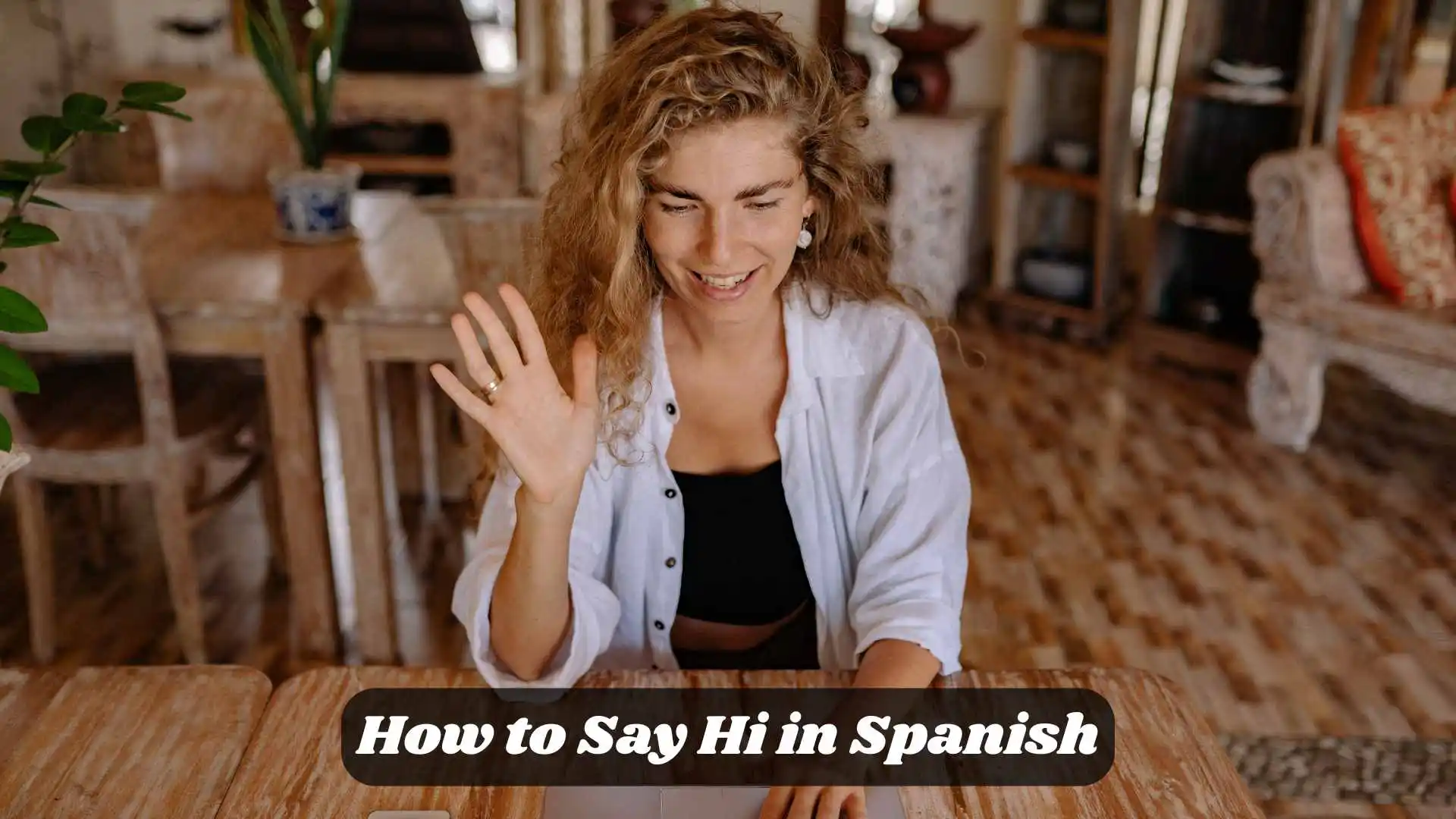
Ever wondered how to say hi in Spanish the right way?
Whether you’re greeting a friend, meeting someone new, or traveling through Spain or Latin America, knowing how to say “hi” can instantly make you sound friendly and confident.
Let’s dive into the most common (and a few fun) ways to greet people in Spanish — along with pronunciation tips, examples, and cultural insights!
🌞 The Most Common Way to Say Hi | “Hola”
The word “Hola” (OH-lah) is the go-to greeting in Spanish. It literally means “hello” or “hi”, and you can use it at any time of day.
Pronunciation tip:
- The “h” in Spanish is silent, so it’s pronounced “OH-lah,” not “HO-lah.”
Examples:
- “¡Hola! ¿Cómo estás?” → Hi! How are you?
- “¡Hola, amigos!” → Hello, friends!
When to use it:
You can say hola to anyone — it works in both formal and informal situations. Just adjust your tone or add a polite phrase afterward if you’re speaking to someone you don’t know well.
😎 Informal Ways to Say Hi
Just like in English, there are casual ways to greet your friends or peers. Here are some relaxed versions of “hi” you’ll hear often:
1. ¡Qué tal!
Pronounced (keh tahl), this phrase literally means “What’s up?”
- Use it with friends, classmates, or colleagues you’re familiar with.
- Example: “¡Qué tal, Ana!” → What’s up, Ana!
2. ¡Buenas!
A short and easy greeting that means “Hi” or “Hey there.”
- Pronounced (BWEH-nahs).
- Works any time of day and is friendly but neutral.
- Example: “¡Buenas! ¿Todo bien?” → Hey! All good?
3. ¡Ey! or ¡Oye!
These are the Spanish equivalents of “Hey!”
- ¡Ey! (like “ay!”) is used casually between friends.
- ¡Oye! (OH-yeh) literally means “Listen!” but it’s often used just to get someone’s attention in a friendly way.
🤝 Formal Greetings in Spanish
When you’re meeting someone older, in a business setting, or in a formal situation, you’ll want to sound a bit more polite.
1. Buenos días – Good morning
Pronounced (BWEH-nos DEE-ahs).
Use it until noon.
2. Buenas tardes – Good afternoon
Pronounced (BWEH-nahs TAR-dess).
Use it from noon until sunset.
3. Buenas noches – Good evening / Good night
Pronounced (BWEH-nahs NOH-ches).
Use it after dark or before going to bed.
💡 Cultural tip:
In many Spanish-speaking countries, greetings are a big deal! People often shake hands, give a light hug, or even a cheek kiss depending on the region — so hola might come with a friendly gesture too.
🗣️ Pronunciation Tips for Saying Hi in Spanish
Here are some quick pronunciation tips to sound natural:
- Silent “H”: Remember, hola starts with a silent “h.”
- Open vowels: Spanish vowels are clear and crisp — “o” in hola is like “o” in “go.”
- Accent rhythm: Spanish words usually emphasize the second-to-last syllable — so it’s OH-lah, not oh-LAH.
Try saying them aloud a few times!
💬 Common Follow Up Phrases After Saying Hi
Once you’ve greeted someone, you’ll usually want to continue the conversation. Here are a few friendly follow-ups:
| English | Spanish | Pronunciation |
| How are you? | ¿Cómo estás? | (KOH-moh ehs-TAHS) |
| What’s new? | ¿Qué hay de nuevo? | (keh eye deh NWEH-boh) |
| Nice to meet you | Mucho gusto | (MOO-choh GOOS-toh) |
| How’s everything? | ¿Cómo va todo? | (KOH-moh bah TOH-doh) |
| Goodbye | Adiós | (ah-DYOS) |
👉 Example conversation:
- A: ¡Hola! ¿Cómo estás?
- B: ¡Muy bien, gracias! ¿Y tú?
(Hi! How are you? – Very good, thanks! And you?)
Conclusion
Now you know how to say hi in Spanish in lots of different ways — from the simple “¡Hola!” to the chill “¡Qué tal!” and the polite “Buenos días.” Whether you’re traveling, making new friends, or just learning for fun, practicing these greetings will help you sound natural and confident.
So go ahead — greet your friends with a cheerful “¡Hola!” next time and watch their faces light up. 🌟

Oliver Grant is a passionate American author known for crafting insightful and engaging content that inspires readers worldwide. With a strong background in creative writing and a deep interest in contemporary literature, Oliver has built a reputation for delivering thought-provoking narratives that resonate with a modern audience.
Throughout his career, Oliver has consistently blended intellectual depth with relatable storytelling, making complex ideas accessible to readers from all walks of life. His writing style is both elegant and approachable, allowing him to connect meaningfully with his audience.
When he’s not writing, Oliver enjoys exploring new ideas, reading across diverse genres, and mentoring aspiring writers. His dedication to the craft and his ability to present fresh perspectives have earned him a loyal following.
Oliver Grant is the author of several acclaimed books, including “The Creative Mindset,” “Stories That Connect,” and “The Modern Writer’s Journey.” Each of these works reflects his commitment to empowering readers and fellow writers through creativity and purposeful storytelling.