
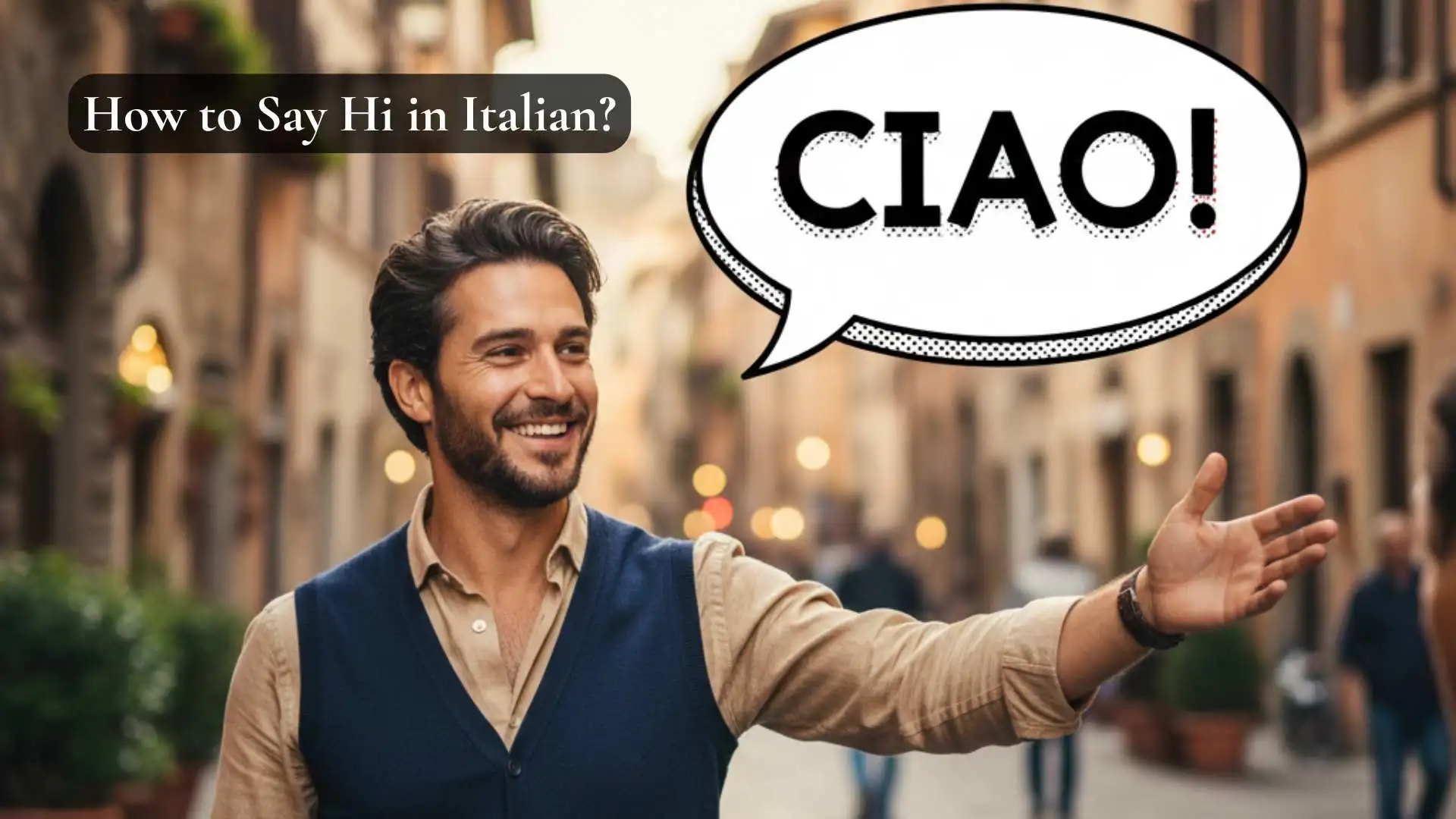
Starting your Italian journey often begins with one simple question: how to say hi in Italian?
If you’re learning the language for travel, work, or just for fun, the right greeting instantly makes conversations smoother and friendlier.
This guide is written just for you—clear, simple, warm, and beginner-friendly.
By the end, you’ll feel confident saying hello to anyone in Italy whether you’re walking into a café, meeting a friend, or talking to someone older or more formal.
Let’s start with the basics and build your confidence step by step. 😊
The Most Common Way to Say “Hi” in Italian | Ciao
Ciao (pronounced chow) is the go-to Italian greeting for friends, peers, and casual settings.
You can use it:
- When meeting a friend
- When leaving (yes, it means both hi and bye)
- In informal conversations, online chats, or casual greetings
👉 Example:
Ciao, Marco! Come stai?
(Hi, Marco! How are you?)
Important: Avoid using ciao with elders, strangers, or professional contacts unless they use it first.
A Polite Way to Say “Hello” | Salve
Salve (pronounced SAHL-veh) is polite, neutral, and perfect when you want to sound respectful without being overly formal.
Use salve:
- At a hotel reception
- When meeting someone you don’t know
- With older people
- In professional settings
👉 Example:
Salve, posso aiutarla?
(Hello, may I help you?)
Very Formal Greeting | Buongiorno
Buongiorno (pronounced bwon-JOR-no) literally means “good day”.
Use it from morning until early afternoon.
Great for:
- Business meetings
- Talking to teachers, doctors, or officials
- Greeting older people
👉 Example:
Buongiorno, signora. Come sta?
(Good morning, ma’am. How are you?)
Afternoon & Evening Greetings | Buon pomeriggio and Buonasera
Buon pomeriggio
Pronounced bwon poh-meh-REE-jo
Meaning: Good afternoon
Though not as common in everyday speech, it’s polite and clear.
Buonasera
Pronounced bwoh-na-SEH-ra
Meaning: Good evening
Use it after 4 or 5 PM.
👉 Example:
Buonasera, a che ora chiudete?
(Good evening, what time do you close?)
When You Want to Sound Cute or Warm | Ehilà or Ciao bella/bello
Ehilà
Pronounced ay-laa
Meaning: Hey there! (Very casual and friendly)
Ciao bella/bello
Pronounced chow BEL-la / chow BEL-lo
Meaning: Hi beautiful / hi handsome
Used between friends or couples—not strangers.
Pronunciation Tips (Super Simple) 🔊
- C before i or e sounds like “ch” in cheese → ciao = chow
- G before i or e sounds like “j” in jet → giorno = jor-no
- Italian vowels are always clear and open—no mumbling
Practice slowly, then speed up as you get comfortable.
Cultural Notes You Should Know 🇮🇹
- Italians often greet with a warm tone even in formal settings.
- In friendly circles, a light cheek kiss (air kiss) is common—but only if you know the person.
- Using ciao too quickly can seem overly casual, so follow the other person’s lead.
Useful Follow Up Phrases After Saying “Hi”
Just like in English, conversations don’t stop at “hi”. Here are some handy follow-ups:
- Come stai? — How are you? (informal)
- Come sta? — How are you? (formal)
- Come va? — How’s it going?
- Tutto bene? — All good?
- Piacere! — Nice to meet you!
- Arrivederci — Goodbye (formal)
- A presto! — See you soon!
Quick Vocabulary Table 📘
| Italian Phrase | Meaning | Pronunciation | Use Case |
| Ciao | Hi/Bye | chow | Informal |
| Salve | Hello | sahl-veh | Polite |
| Buongiorno | Good morning/day | bwon-jor-no | Formal |
| Buonasera | Good evening | bwoh-na-seh-ra | Formal |
| Come stai? | How are you? | koh-meh stai | Informal |
| Arrivederci | Goodbye | ah-ree-veh-der-chee | Formal |
Conclusion
Learning how to say hi in Italian opens the door to friendly conversations and smoother interactions. Start with ciao, use salve when unsure, and choose the formal greetings for respectful settings. Practice these phrases out loud, have fun with the sounds, and don’t be afraid to greet an Italian with confidence. Every “ciao” takes you one step closer to sounding like a local! 🇮🇹✨

John Preston is a passionate American author known for his insightful storytelling and thought-provoking narratives. With a deep love for literature and a sharp eye for detail, John crafts stories that not only entertain but also inspire reflection and growth. His modern writing style, combined with relatable characters and real-life settings, has earned him a loyal readership across diverse audiences.
Dedicated to exploring human emotions, relationships, and societal challenges, John brings authenticity and depth to every page he writes. When he’s not working on his next manuscript, you can find him in his cozy office, surrounded by books, a warm cup of coffee by his side, and his laptop always within reach.
Some of his most notable works include:
The Silent Echoes
Chasing the Dawn
Beneath the City Lights
Through his writing, John Preston continues to leave a lasting impact, one story at a time.