
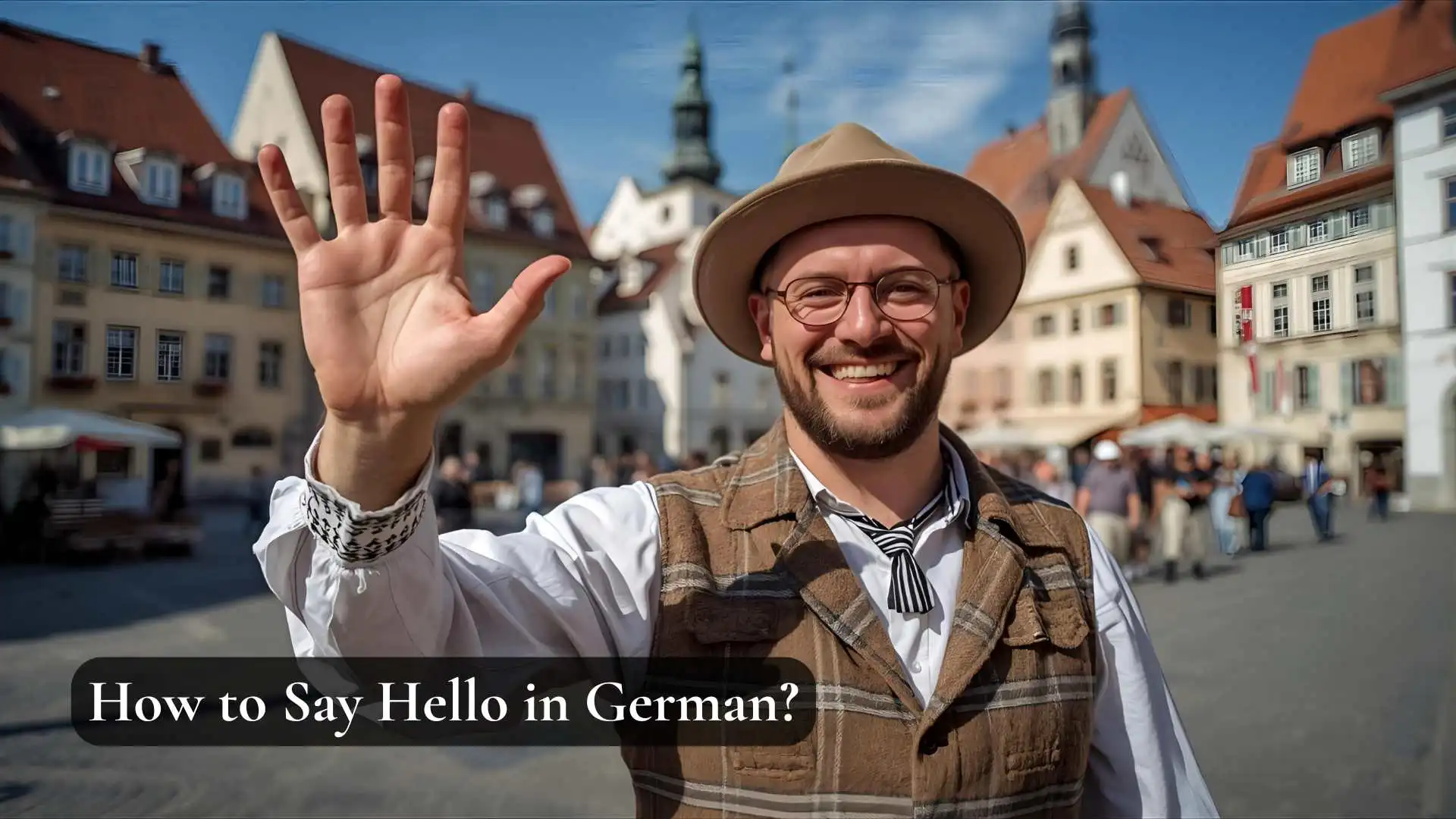
Learning a new language can be exciting and sometimes a little tricky, especially when it comes to greetings.
If you’ve ever wondered how to say hello in German?, you’re in the right place!
In this article, we’ll walk through simple, practical ways to greet someone in German, whether you’re meeting a friend at a café or introducing yourself in a professional setting.
By the end, you’ll feel confident saying “hello” naturally, understand when to use each greeting, and even learn a few follow-up phrases to keep conversations flowing smoothly.
Let’s dive in and make your first German greetings feel fun and effortless! 🎉
Common Ways to Say Hello in German
Hallo
Pronunciation: HAH-loh
This is the most common and versatile way to say hello, similar to “Hi” in English. You can use it with friends, colleagues, or even strangers in casual settings. For example:
- Hallo, wie geht’s dir? – “Hello, how are you?”
Guten Tag
Pronunciation: GOO-ten tahk
Literally meaning “Good day,” this is a polite and formal greeting. Use it in professional situations or when meeting someone for the first time. Example:
- Guten Tag, Herr Müller! – “Good day, Mr. Müller!”
Guten Morgen / Guten Abend
Pronunciation: GOO-ten MOR-gen / GOO-ten AH-bent
These are time-specific greetings: “Good morning” and “Good evening.” Perfect for showing respect or starting a conversation politely. Example:
- Guten Morgen! Haben Sie gut geschlafen? – “Good morning! Did you sleep well?”
Informal and Friendly Greetings
Servus / Hi / Hey
Pronunciation: SER-voos / hi / hey
In southern Germany and Austria, “Servus” is a casual hello. “Hi” and “Hey” are widely used among young people or friends. Just like in English, these greetings give a friendly, relaxed vibe.
Moin
Pronunciation: moyn
This is common in northern Germany and works at any time of day. It’s short, casual, and perfect for daily encounters.
Follow Up Phrases After Saying Hello
After greeting someone, Germans often add a small follow-up to continue the conversation. Here are a few examples:
- Wie geht’s dir? – “How are you?” (informal)
- Wie geht es Ihnen? – “How are you?” (formal)
- Schön, dich zu sehen! – “Nice to see you!”
- Auf Wiedersehen! – “Goodbye!”
Mini Vocabulary Table for Easy Reference
| German Phrase | Pronunciation | Meaning | Usage |
| Hallo | HAH-loh | Hello | Casual/anytime |
| Guten Tag | GOO-ten tahk | Good day | Formal/professional |
| Guten Morgen | GOO-ten MOR-gen | Good morning | Morning/any formal |
| Guten Abend | GOO-ten AH-bent | Good evening | Evening/formal |
| Servus | SER-voos | Hi / Hello | Informal/friendly |
| Moin | moyn | Hi | Casual/Northern Germany |
Cultural Notes
Germans appreciate politeness and proper greetings. Using the right greeting shows respect and can make your interactions more positive. In casual settings, you can mix informal greetings like “Hallo” or “Moin,” but in offices or with elders, stick to “Guten Tag” or “Guten Morgen.” 🌟
Conclusion
Learning how to say hello in German is the first step toward speaking confidently in everyday situations. Try practicing these greetings aloud, experiment with formal and informal settings, and don’t be afraid to mix in some fun phrases like “Servus” or “Moin.” The more you practice, the more natural it will feel, and soon, greeting someone in German will be as easy as saying “hi” in English. Keep smiling and enjoy your language journey! 😊

John Preston is a passionate American author known for his insightful storytelling and thought-provoking narratives. With a deep love for literature and a sharp eye for detail, John crafts stories that not only entertain but also inspire reflection and growth. His modern writing style, combined with relatable characters and real-life settings, has earned him a loyal readership across diverse audiences.
Dedicated to exploring human emotions, relationships, and societal challenges, John brings authenticity and depth to every page he writes. When he’s not working on his next manuscript, you can find him in his cozy office, surrounded by books, a warm cup of coffee by his side, and his laptop always within reach.
Some of his most notable works include:
The Silent Echoes
Chasing the Dawn
Beneath the City Lights
Through his writing, John Preston continues to leave a lasting impact, one story at a time.