
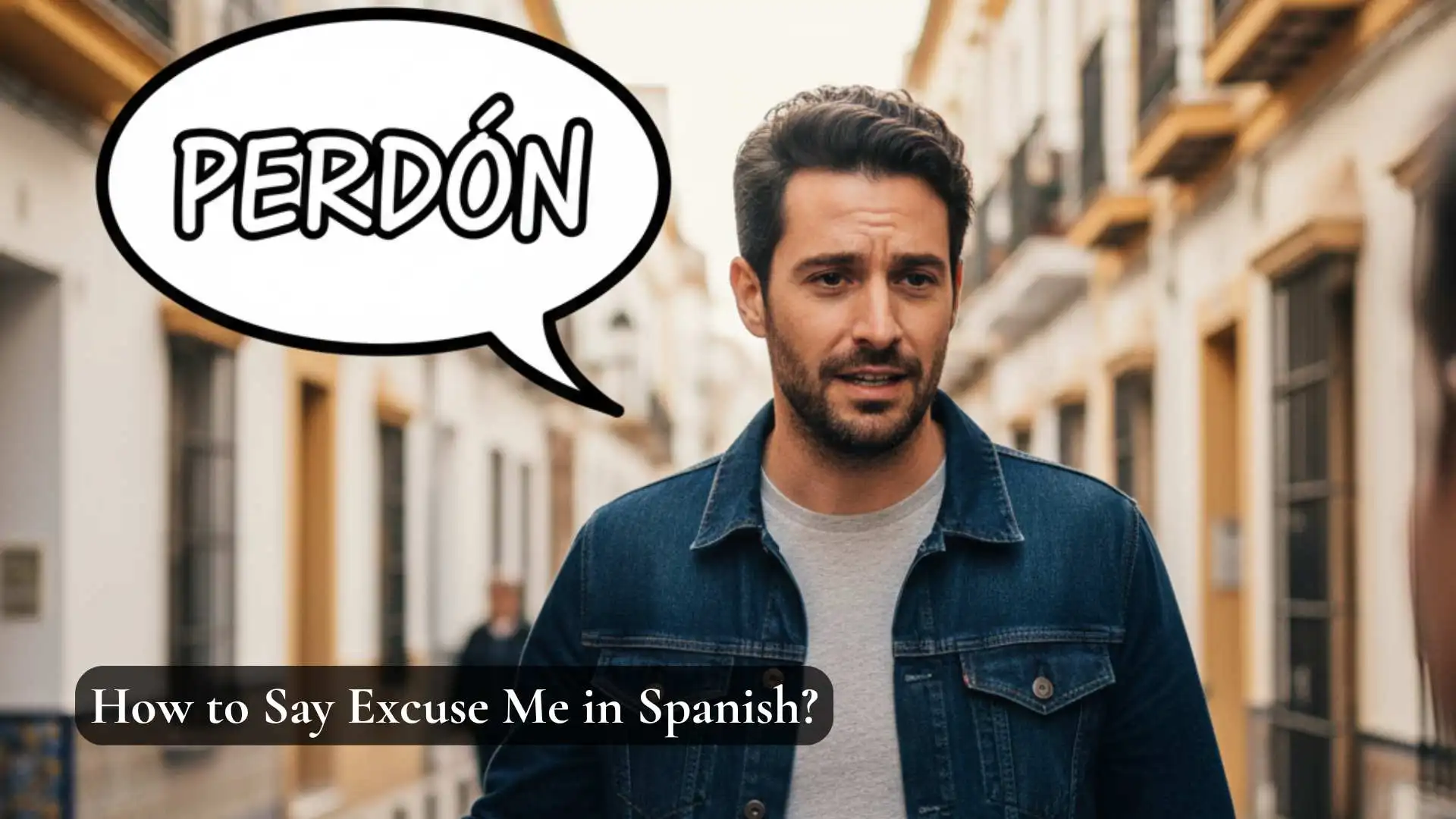
If you’re learning Spanish, one of the first polite expressions you’ll want to master is how to say “excuse me” in Spanish.
You might use it when you need someone’s attention, when you bump into someone, or when you want to move through a crowd.
This guide is written just for you so you can speak confidently without feeling confused or overwhelmed.
By the time you finish reading, you’ll know several natural ways to say “excuse me,” when to use each one, and how they actually sound in real conversations.
Let’s make Spanish feel easy, friendly, and fun 😊
Different Ways to Say “Excuse Me” in Spanish
Spanish offers more than one phrase for “excuse me,” and each one has its own purpose. Think of them like tools — the more you know, the smoother your conversations will become.
Perdón | The Everyday “Excuse Me”
This is the go-to phrase when you accidentally bump into someone or interrupt slightly.
Pronunciation: pehr-DOHN
Use it when:
- You step on someone’s foot
- You interrupt a conversation
- You brush past someone
Example:
Perdón, no te vi.
(Excuse me, I didn’t see you.)
Just like in English, tone matters. Say it softly to sound polite.
Disculpa / Disculpe | Polite and Attentive “Excuse Me”
These phrases mean “excuse me” in the sense of asking for attention.
- Disculpa → informal (talking to a friend or someone your age)
- Disculpe → formal (talking to an elder, stranger, or authority figure)
Pronunciation:
- dees-KOOL-pah
- dees-KOOL-peh
Use it when:
- Asking a stranger for directions
- Getting a waiter’s attention
- Starting a polite request
Example:
Disculpe, ¿me puede ayudar?
(Excuse me, can you help me?)
Con permiso | “Excuse Me” to Move Through a Space
This phrase literally means “with permission,” and it’s perfect when you need to pass someone.
Pronunciation: kohn pehr-MEE-soh
Use it when:
- Moving through a crowd
- Passing behind someone
- Squeezing into a tight space
Example:
Con permiso, necesito pasar.
(Excuse me, I need to get through.)
In many Spanish-speaking cultures, saying con permiso is a small act of respect — it shows you value personal space.
When to Use Formal vs Informal Expressions
Spanish often switches between formal and informal based on your relationship with the person.
Use informal with:
- Friends
- Younger people
- Peers
Example: Disculpa, ¿qué hora es?
Use formal with:
- Strangers
- Elderly people
- Professionals (police, teachers, doctors)
Example: Disculpe, ¿dónde está la estación?
When in doubt, choose the formal version — it’s always safe and respectful.
Common Follow Up Phrases After “Excuse Me”
Once you say “excuse me,” you often need a follow-up. Here are helpful options:
- ¿Me puede ayudar? – Can you help me?
- ¿Dónde está…? – Where is…?
- ¿Cómo llego a…? – How do I get to…?
- Gracias. – Thank you
- Hasta luego. – See you later 👋
Let’s look at another example:
Disculpe, ¿dónde está el baño?
(Excuse me, where is the bathroom?)
Mini Vocabulary List 📘
| Spanish Phrase | Meaning | Pronunciation |
| Perdón | Excuse me (small mistake) | pehr-DOHN |
| Disculpa | Excuse me (informal) | dees-KOOL-pah |
| Disculpe | Excuse me (formal) | dees-KOOL-peh |
| Con permiso | Excuse me (to pass) | kohn pehr-MEE-soh |
| Gracias | Thank you | GRAH-syahs |
| ¿Me puede ayudar? | Can you help me? | meh PWEH-deh ah-yoo-DAR |
Cultural Notes You’ll Love 🌎
- In many Latin American countries, con permiso is used even at home — kids say it when walking past adults as a sign of respect.
- Perdón can also mean “sorry,” so your tone helps people understand your intention.
- Waiters often respond with “sí, dígame” meaning “yes, tell me,” when you say disculpe. It’s friendly, not rude.
Conclusion
Learning how to say excuse me in Spanish helps you sound polite, confident, and natural in any situation. Whether you need someone’s attention or want to squeeze through a busy street, these simple phrases will make every interaction smoother. Practice them out loud, mix them into your daily conversations, and watch how your Spanish becomes more natural each day. You’ve got this — keep going! 🇪🇸✨

James Parker is a passionate and insightful American author known for his unique ability to connect complex ideas with everyday experiences. With a background in creative writing and over a decade of experience in the literary world, James has dedicated his career to inspiring readers through thoughtful storytelling and practical wisdom.
His writing style is modern, engaging, and deeply reflective, often focusing on personal growth, human relationships, and the subtle beauty of life’s challenges. James Parker’s work is highly respected for its authenticity and relevance, making him a favorite among readers seeking both knowledge and emotional connection.
Over the years, James has authored several impactful books, including “The Path Within”, “Finding Clarity”, and “Bridges of Thought”, which continue to resonate with audiences around the world.