
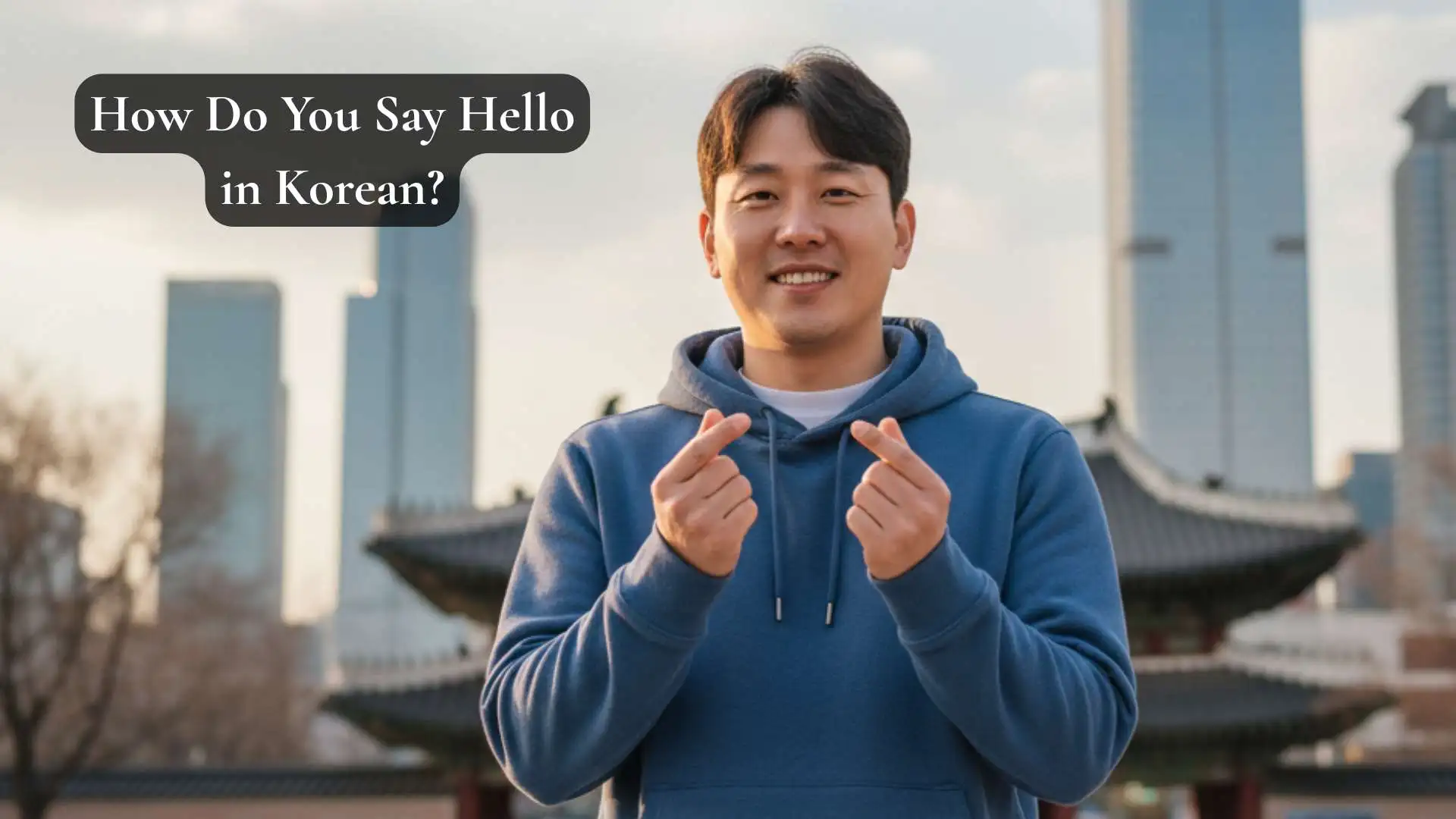
When you first wonder how do you say hello in Korean?, you’re usually looking for a simple phrase that helps you connect with real people.
If that’s you, then you’re in the right place. This guide is written just for beginners who want clear explanations, easy pronunciation, and real-life examples without confusion.
You’ll learn the most popular greetings, when to use them, and how they change based on age and formality.
By the end, you’ll feel confident enough to say hello like a native speaker… or at least impress someone today 😊.
The Most Common Way to Say Hello in Korean
1. Annyeonghaseyo (안녕하세요) | The Polite & Universal Hello
This is the most common greeting you’ll hear in Korea.
- Pronunciation: AHN-nyong-ha-SE-yo
- Use when: Talking to strangers, older people, coworkers, teachers, or anyone you want to show respect to.
- Example:
안녕하세요! 오늘 기분 어때요?
Annyeonghaseyo! Oneul gibun eottaeyo?
“Hello! How are you feeling today?”
Just like in English, this polite form works almost everywhere.
Informal Ways to Say Hello in Korean
2. Annyeong (안녕) | The Casual Hello
Use this with close friends, same-age people, or younger kids.
- Pronunciation: AHN-nyong
- Use when: Texting friends, greeting siblings, talking casually.
- Example:
안녕! 뭐 해?
“Hi! What are you doing?”
3. Yoboseyo (여보세요) | Phone Greeting Only ☎️
This greeting is special because you ONLY use it on the phone.
- Pronunciation: YO-bo-SE-yo
- Use when: Picking up a call.
- Example:
여보세요? 들리세요?
“Hello? Can you hear me?”
Formal or Respectful Greetings
4. Annyeonghasimnikka (안녕하십니까) – Very Formal Hello
You’ll hear this in news broadcasts, speeches, or military settings.
- Pronunciation: AHN-nyong-ha-shim-ni-kka
- Use when: Speaking in very formal or professional situations.
- Perfect if you want to sound extra respectful.
Cultural Notes You Should Know 🇰🇷
- Koreans use different greetings depending on age and relationship.
- Bowing slightly while saying hello shows respect.
- Using the wrong form isn’t offensive, but using polite expressions is always safer when you’re unsure.
Useful Follow Up Phrases After Saying Hello
Just like in English, greetings often lead to small talk. Here are helpful follow-ups:
How are you?
- 어떻게 지내요?
Eotteoke jinaeyo?
(Polite)
Nice to meet you
- 반갑습니다 (Bangapseumnida) – formal
- 반가워 (Bangawo) – casual
Goodbye
- 안녕히 계세요 (Annyeonghi gyeseyo) – when you leave
- 안녕히 가세요 (Annyeonghi gaseyo) – when they leave
- 안녕 (Annyeong) – casual bye/hi
Mini Vocabulary List
| Korean | Pronunciation | Meaning |
| 안녕하세요 | annyeonghaseyo | Hello (polite) |
| 안녕 | annyeong | Hi/Bye (casual) |
| 여보세요 | yoboseyo | Phone hello |
| 안녕하십니까 | annyeonghasimnikka | Formal hello |
| 반갑습니다 | bangapseumnida | Nice to meet you |
| 안녕히 계세요 | annyeonghi gyeseyo | Goodbye (you leave) |
Conclusion
Learning how to say hello in Korean isn’t just about memorizing a word. It’s about choosing the right style for the right moment. Now you know the polite, casual, and phone greetings along with follow-up phrases that help you sound more natural. Keep practicing these short phrases every day—you’ll be surprised how quickly they become part of your everyday vocabulary 🌟.

John Preston is a passionate American author known for his insightful storytelling and thought-provoking narratives. With a deep love for literature and a sharp eye for detail, John crafts stories that not only entertain but also inspire reflection and growth. His modern writing style, combined with relatable characters and real-life settings, has earned him a loyal readership across diverse audiences.
Dedicated to exploring human emotions, relationships, and societal challenges, John brings authenticity and depth to every page he writes. When he’s not working on his next manuscript, you can find him in his cozy office, surrounded by books, a warm cup of coffee by his side, and his laptop always within reach.
Some of his most notable works include:
The Silent Echoes
Chasing the Dawn
Beneath the City Lights
Through his writing, John Preston continues to leave a lasting impact, one story at a time.