
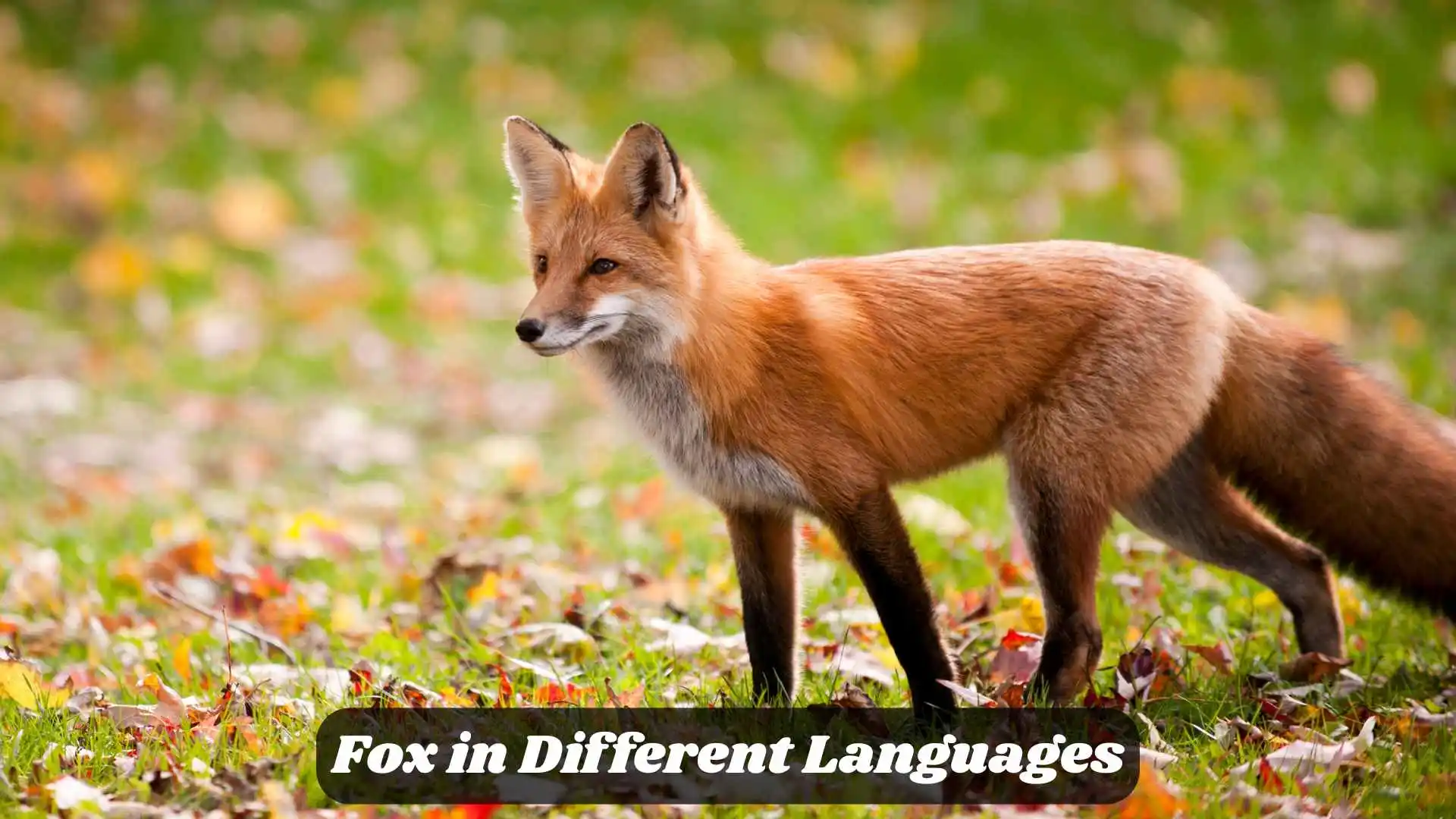
Have you ever wondered how people around the world say “fox”?
Whether it’s whispered in a forest tale, written in folklore, or spoken in everyday conversation, the word fox carries a clever charm across languages.
In this article, you’ll discover “Fox in Different Languages”—an exciting exploration of how this intelligent, mysterious creature is named and celebrated across cultures.
From Asia to Africa, Europe to the Americas, each translation reveals something unique about how different societies see the fox—sometimes as wise, sometimes as mischievous, and always fascinating.
This guide is written just for you: simple, clear, and full of linguistic gems that’ll make learning feel fun and effortless.
So, get ready to travel the world through words and uncover how the fox speaks every language of its own kind of magic.
🌍 How to Say Fox in 70 Different Languages
- English (🇬🇧) – Fox | Pronunciation: foks
Example: The fox ran into the forest. - Spanish (🇪🇸) – Zorro | Pronunciation: ZO-rroh
Example: El zorro es muy astuto. (The fox is very clever.) - French (🇫🇷) – Renard | Pronunciation: ruh-NAR
Example: Le renard vit dans la forêt. (The fox lives in the forest.) - German (🇩🇪) – Fuchs | Pronunciation: fooks
Example: Der Fuchs ist schnell. (The fox is fast.) - Italian (🇮🇹) – Volpe | Pronunciation: VOHL-peh
Example: La volpe caccia di notte. (The fox hunts at night.) - Portuguese (🇵🇹) – Raposa | Pronunciation: rah-POH-zah
Example: A raposa é inteligente. (The fox is intelligent.) - Russian (🇷🇺) – Лиса (Lisa) | Pronunciation: lee-SAH
Example: Лиса спряталась в траве. (The fox hid in the grass.) - Chinese (Mandarin) (🇨🇳) – 狐狸 (Húlí) | Pronunciation: hoo-lee
Example: 狐狸很聪明. (The fox is smart.) - Japanese (🇯🇵) – 狐 (Kitsune) | Pronunciation: kee-tsoo-neh
Example: 狐は物語によく出ます. (Foxes often appear in stories.) - Korean (🇰🇷) – 여우 (Yeou) | Pronunciation: yuh-oo
Example: 여우는 숲에 산다. (The fox lives in the forest.) - Arabic (🇸🇦) – ثعلب (Tha‘lab) | Pronunciation: tha-lab
Example: الثعلب ماكر جدا. (The fox is very sly.) - Hindi (🇮🇳) – लोमड़ी (Lomdi) | Pronunciation: lohm-dee
Example: लोमड़ी जंगल में रहती है। (The fox lives in the forest.) - Urdu (🇵🇰) – لومڑی (Lomri) | Pronunciation: lohm-ree
Example: لومڑی بہت چالاک ہوتی ہے۔ (The fox is very clever.) - Turkish (🇹🇷) – Tilki | Pronunciation: TEEL-kee
Example: Tilki kurnazdır. (The fox is cunning.) - Greek (🇬🇷) – Αλεπού (Alepóu) | Pronunciation: ah-leh-POO
Example: Η αλεπού τρέχει γρήγορα. (The fox runs fast.) - Hebrew (🇮🇱) – שועל (Shual) | Pronunciation: shoo-ahl
Example: השועל חכם מאוד. (The fox is very wise.) - Thai (🇹🇭) – จิ้งจอก (Jingjok) | Pronunciation: jing-jawk
Example: จิ้งจอกเป็นสัตว์ฉลาด. (The fox is a clever animal.) - Vietnamese (🇻🇳) – Cáo | Pronunciation: kaow
Example: Con cáo chạy nhanh. (The fox runs fast.) - Swahili (🇰🇪) – Mbweha | Pronunciation: m-bweh-ha
Example: Mbweha ni mwerevu. (The fox is smart.) - Zulu (🇿🇦) – Impungushe | Pronunciation: eem-poon-goo-sheh
Example: Impungushe ihamba ehlathini. (The fox walks in the forest.) - Polish (🇵🇱) – Lis | Pronunciation: lees
Example: Lis jest sprytny. (The fox is clever.) - Dutch (🇳🇱) – Vos | Pronunciation: vos
Example: De vos is slim. (The fox is smart.) - Swedish (🇸🇪) – Räv | Pronunciation: rehv
Example: Räven springer fort. (The fox runs quickly.) - Danish (🇩🇰) – Ræv | Pronunciation: rehv
Example: Ræven er klog. (The fox is clever.) - Norwegian (🇳🇴) – Rev | Pronunciation: rehv
Example: Reven bor i skogen. (The fox lives in the forest.) - Finnish (🇫🇮) – Kettu | Pronunciation: keh-too
Example: Kettu on ovela. (The fox is sly.) - Czech (🇨🇿) – Liška | Pronunciation: LEE-shka
Example: Liška je chytrá. (The fox is smart.) - Hungarian (🇭🇺) – Róka | Pronunciation: ROH-kah
Example: A róka gyors. (The fox is fast.) - Romanian (🇷🇴) – Vulpe | Pronunciation: VUL-peh
Example: Vulpea este vicleană. (The fox is cunning.) - Ukrainian (🇺🇦) – Лисиця (Lysytsia) | Pronunciation: lee-SI-tsya
Example: Лисиця хитра. (The fox is sly.) - Persian (🇮🇷) – روباه (Rubah) | Pronunciation: roo-bah
Example: روباه باهوش است. (The fox is intelligent.) - Bengali (🇧🇩) – শিয়াল (Shiyal) | Pronunciation: shee-yal
Example: শিয়াল চালাক প্রাণী। (The fox is a clever animal.) - Tamil (🇮🇳) – நரி (Nari) | Pronunciation: nah-ree
Example: நரி காட்டில் வாழ்கிறது. (The fox lives in the forest.) - Telugu (🇮🇳) – నక్క (Nakka) | Pronunciation: nak-ka
Example: నక్క చాలా తెలివిగా ఉంటుంది. (The fox is very clever.) - Kannada (🇮🇳) – ನರಿ (Nari) | Pronunciation: nah-ree
Example: ನರಿ ಅರಣ್ಯದಲ್ಲಿ ಇದೆ. (The fox is in the forest.) - Malayalam (🇮🇳) – കുറുക്കൻ (Kurukkan) | Pronunciation: koo-rook-kan
Example: കുറുക്കൻ ചതിയൻ ആണ്. (The fox is cunning.) - Marathi (🇮🇳) – कोल्हा (Kolha) | Pronunciation: kol-ha
Example: कोल्हा जंगलात राहतो. (The fox lives in the forest.) - Gujarati (🇮🇳) – શિયાળ (Shiyal) | Pronunciation: shee-yaal
Example: શિયાળ ખૂબ ચાલાક છે. (The fox is very clever.) - Punjabi (🇮🇳) – ਲੋਮੜੀ (Lomri) | Pronunciation: lohm-ree
Example: ਲੋਮੜੀ ਬਹੁਤ ਚਾਲਾਕ ਹੈ। (The fox is very clever.) - Sindhi (🇵🇰) – لومڙ (Lomr) | Pronunciation: lohm-rr
Example: لومڙ ڏاڍي چالاڪ آهي. (The fox is very clever.) - Pashto (🇦🇫) – ګیدړ (Gidar) | Pronunciation: gee-dar
Example: ګیدړ زرنګ دی. (The fox is clever.) - Kurdish (🇮🇶) – Rovî | Pronunciation: roh-vee
Example: Rovî zîrek e. (The fox is smart.) - Mongolian (🇲🇳) – Үнэг (Üneg) | Pronunciation: oo-neg
Example: Үнэг хурдан гүйдэг. (The fox runs fast.) - Kazakh (🇰🇿) – Түлкі (Tülki) | Pronunciation: tool-kee
Example: Түлкі айлакер. (The fox is cunning.) - Uzbek (🇺🇿) – Tulki | Pronunciation: tool-kee
Example: Tulki juda ayyor. (The fox is very sly.) - Tajik (🇹🇯) – Рӯбоҳ (Rubah) | Pronunciation: roo-bah
Example: Рӯбоҳ зирак аст. (The fox is clever.) - Georgian (🇬🇪) – მელა (Mela) | Pronunciation: meh-lah
Example: მელა სწრაფია. (The fox is fast.) - Armenian (🇦🇲) – Աղվես (Aghves) | Pronunciation: agh-ves
Example: Աղվեսը խորամանկ է. (The fox is cunning.) - Malay (🇲🇾) – Musang | Pronunciation: moo-sang
Example: Musang pandai menipu. (The fox is cunning.) - Indonesian (🇮🇩) – Rubah | Pronunciation: roo-bah
Example: Rubah itu licik. (The fox is sly.) - Tagalog (🇵🇭) – Soro | Pronunciation: soh-roh
Example: Ang soro ay matalino. (The fox is smart.) - Hawaiian (🇺🇸) – ʻAlepoʻo | Pronunciation: ah-leh-po-oh
Example: ʻAlepoʻo holoholo i ka nahele. (The fox roams in the forest.) - Maori (🇳🇿) – Pokiha | Pronunciation: poh-kee-hah
Example: He mōhio te pokiha. (The fox is clever.) - Irish (🇮🇪) – Sionnach | Pronunciation: shin-akh
Example: Tá an sionnach glic. (The fox is sly.) - Scottish Gaelic (🏴) – Madadh-ruadh | Pronunciation: mah-dah-roo-ah
Example: Tha am madadh-ruadh luath. (The fox is fast.) - Welsh (🏴) – Llwynog | Pronunciation: hloo-in-og
Example: Mae’r llwynog yn glyfar. (The fox is clever.) - Icelandic (🇮🇸) – Refur | Pronunciation: reh-vur
Example: Refurinn er snjall. (The fox is smart.) - Latvian (🇱🇻) – Lapsa | Pronunciation: lap-sa
Example: Lapsa ir viltīga. (The fox is sly.) - Lithuanian (🇱🇹) – Lapė | Pronunciation: lah-peh
Example: Lapė yra gudri. (The fox is clever.) - Estonian (🇪🇪) – Rebane | Pronunciation: reh-bah-neh
Example: Rebane on kaval. (The fox is cunning.)
📝 Conclusion
From Asia to Europe, Africa to the Americas, the word “fox” shows how cultures admire and describe this mysterious creature. No matter the language, the fox always represents cleverness, speed, and survival—a symbol shared across the world.

James Parker is a passionate and insightful American author known for his unique ability to connect complex ideas with everyday experiences. With a background in creative writing and over a decade of experience in the literary world, James has dedicated his career to inspiring readers through thoughtful storytelling and practical wisdom.
His writing style is modern, engaging, and deeply reflective, often focusing on personal growth, human relationships, and the subtle beauty of life’s challenges. James Parker’s work is highly respected for its authenticity and relevance, making him a favorite among readers seeking both knowledge and emotional connection.
Over the years, James has authored several impactful books, including “The Path Within”, “Finding Clarity”, and “Bridges of Thought”, which continue to resonate with audiences around the world.